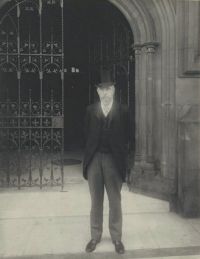
Arthur Aikin Brodribb

Biographical details

Portrait of Arthur Aikin Brodribb Arthur Aikin Brodribb,  Dictionary of National Biography… (1885)

“ Channing on the progress of tractarianism in England, she pronounces ‘our Church Establishment the most systematically servile in Christendom.’ In discussing the first Reform Bill, she defines radicalism as ‘the supremacy of the rude and selfish and ignorant many.’ Miss Aikin was, in fact, a whig, with a generous love of liberty wherever she found it under any conditions, but with cultivated tastes that precluded sympathy with democracy. ”
Source: Wikisource

Portrait of Arthur Aikin Brodribb Arthur Aikin Brodribb,  Dictionary of National Biography… (1885)

“ Lucy Aikin, his daughter, describes this migration as ‘a blessed change from Yarmouth.’ In London the warm welcome of his friends, and his own high character, brought him a fair measure of success. He practised as a physician only, and devoted his whole leisure to literature. His career, however, as a physician was cut short a few years later by a stroke of paralysis, in consequence of which he gave up his house and practice to his son, and retired to Stoke Newington. There he spent the last twenty-four years of his life in his favourite studies and occupations. ”
Source: Wikisource

Portrait of Arthur Aikin Brodribb Arthur Aikin Brodribb,  Dictionary of National Biography… (1899)

“ Wakefield was a man of singular humanity, hating cruelty of all kinds, and sensitive to the misery of others. He abandoned his favourite sports as soon as he conceived that they involved cruelty, and vainly attempted to persuade Fox to do the same. Ἀλήθειαν κὰι ἐλευθερίαν was the motto of his bookplate, and of his life. He holds a distinct position in the history of English scholarship. As a scholar, he had decided merits and conspicuous defects. He had abundance of good taste, extensive general knowledge, and great industry ”
Source: Wikisource

Get perspective with Kwize: daily news enlightened by great literature