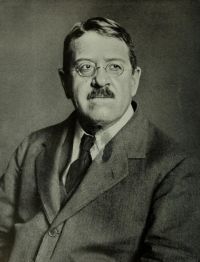
Arthur Benton Sanford

Biographical details

Arthur Benton Sanford,  An Easter Disciple: The Chronicle of Quintus…

“ The Hindus had declared, in their Rig-Veda, their beautiful conception of the immortality of the soul, and had written of a future "imperishable world, where there is eternal light and glory." The Grecian and Roman mythologies had voiced their hope of blessedness for the shades of the departed. Everywhere serious men had been asking as to the experiences beyond the grave. It was as if the Eastern world had become a vast parliament chamber, wherein the nations were proclaiming their different doctrines as to a future life. ”
Source: Gutenberg

Arthur Benton Sanford,  An Easter Disciple: The Chronicle of Quintus…

“ To men who are his sheep he makes a promise that compasses the furthest limit of the eternities. Of such he says: "Unto those who follow me I will give the Life of the Ages. Beyond the tomb they are to live on forevermore." Nor to the Jews alone, amid the maze of those Corinthian columns, does the coming Shepherd speak. The listening Roman soldier, wearing the armor of the empire on the Tiber, comes within the circle of his promise. Into the face of Quintus he looks and benignly says: "There are other sheep not of the Jewish pasture, to whom I shall give this unending life. ”
Source: Gutenberg

Arthur Benton Sanford,  An Easter Disciple: The Chronicle of Quintus…

“ In a short week after his words to Martha at Bethany he had become, through his own rare experience, the resurrection and the life. Not the dead Buddha, nor the departed Zoroaster, nor the vanished Pythagoras ever came back through the opened door of the sepulcher, wearing the grave clothes of those who sleep. Human fancy had never dreamed of such a rapturous denouement for faiths other than Christianity. The resurrection of the Lord is the crowning narrative with which the Gospels close. It is a risen Christ who repairs the wastage of human decay and death. ”
Source: Gutenberg

Get perspective with Kwize: daily news enlightened by great literature