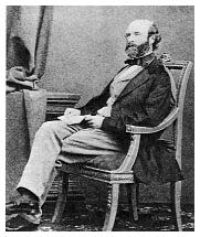
C. G. Lloyd

Biographical details

C. G. Lloyd Synopsis of Some Genera of the Large Pyrenomycetes

The species Camillea Sagraena differs from the other in having the fertile portion composed largely of spores (scanty in others) and in having part of the sterile portion of uncolored hyphae. Of course, it will form a "genus." Thus the genus Camillea can be easily divided into five "genera" and we make the suggestion for the benefit of those engaged in breaking up the old genera, and proposing new names to which to add their own. Who will rise to the occasion?
THE GENUS THAMNOMYCES.
This is included in Saccardo as part of Xylaria, but we feel is well entitled to generic rank.
Source: Gutenberg

C. G. Lloyd Synopsis of Some Genera of the Large Pyrenomycetes

They are all evidently closely related plants, and I think best classified under one general head, or genus, Camillea. They are quite different from the Hypoxylons of the temperate region, although we do not question that the tropical species are included in Saccardo mostly under Hypoxylon. When we come to compare what little we know of the species we find several differences on which "genera" could be based, and no doubt will be in time.
Source: Gutenberg

C. G. Lloyd Synopsis of Some Genera of the Large Pyrenomycetes

Camillea Sagraena is undoubtedly a common species in the American tropics. It has never been well described, and the white tissue of the interior lower half, which is a very rare occurrence in similar black, carbonous plants, has never been noted. A "new genus" might be based on this feature. It is quite fragile and the broken bases as shown (Fig. 839) are often all that remain of it when old. Camillea surinamensis as named by Berkeley from specimens from Surinam, type at Kew, is exactly the same species.
Source: Gutenberg

Get perspective with Kwize: daily news enlightened by great literature