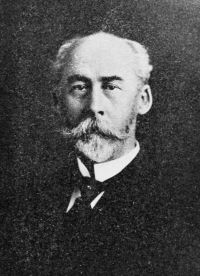
C. Malcolm Watkins

Biographical details

C. Malcolm Watkins,  The Cultural History of Marlborough…

“ The great plantation house with its sophisticated elegancies, its outward formalities, and its rich resort for the intellect in the form of a varied library, was the center and spirit of the society of which men like Mercer were leaders. With the death of the system came the death of the great house, and the rise and fall of Marlborough symbolizes, as well as anything can, the life cycle of Virginia’s colonial plantation order. ”
Source: Gutenberg

C. Malcolm Watkins,  The Cultural History of Marlborough…

“ Rude houses placed informally and connected by lanes and footpaths, the courthouse attempting to dominate them like a village schoolmaster in a class of country bumpkins, a few outbuildings, a boat landing or two, some cultivated land, and a road leading away from the courthouse to the north with another running in the opposite direction to the creek—this is the way Marlborough must have looked even in its best days in 1708. ”
Source: Gutenberg

C. Malcolm Watkins,  The Cultural History of Marlborough…

“ THE DEATH OF MARLBOROUGH AS A TOWN
Could this poor village have survived had the courthouse not burned? It was an unhappy contrast to the vision of a town governed by “benchers of the guild hall,” bustling with mercantile activity, swarming on busy market days with ordinaries filled with people. This fantasy may have pulsated briefly through the minds of a few. But, after the abrogation of the Port Act in 1710, there was little left to justify the town’s existence other than the courthouse.
”
Source: Gutenberg

Get perspective with Kwize: daily news enlightened by great literature