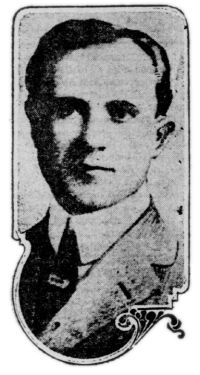
Charles Oldham

Biographical details

Charles Oldham,  The Zoologist (1901)

“ It seems to arise from the absence of any conception that food once dropped can be found again, and no doubt implies that Bats obtain, and have for an infinite number of generations obtained, all their food whilst on the wing. Even if this be so, it is still very curious that a Bat should be able to adapt itself at once to entirely new conditions, and take food readily whilst held in the hand, and yet after a captivity of nearly three months should persistently ignore palatable food which it has dropped, and which lies immediately beneath it. ”
Source: Wikisource

Charles Oldham,  The Zoologist (1901)

“ If, however, a fragment of beef or a decapitated moth is dropped, and lies on the table immediately beneath the Bat's nose, or if a partially devoured mealworm succeeds, by dint of its convulsive struggles, in escaping from the Bat's jaws, and instinctively makes for the darkness beneath its body or wings, the Bat makes no attempt to recover it. ”
Source: Wikisource

Charles Oldham,  The Zoologist (1899)

“ When walking, most of our British Bats carry the tail curved downward and forward beneath the body, the interfemoral membrane forming a pouch or bag. If a moth or other large insect be encountered, the Bat seizes it with a rapid snatch, slightly spreading its fore limbs with the wings still folded, and, pressing them firmly on the ground at the carpus in order to steady itself, brings its feet forward in order to increase the capacity of the pouch, into which, by bending its neck and thrusting its head beneath its body, it pushes its prey. ”
Source: Wikisource

Get perspective with Kwize: daily news enlightened by great literature