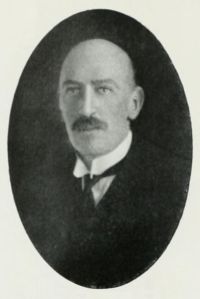
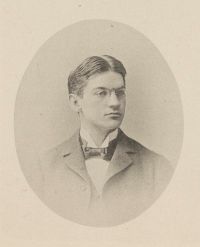
Edward Garnett

Biographical details

Edward Garnett Turgenev: A Study

After recording many exquisite memories of nature and of love, Turgenev, then, compares human activities to those of gnats on the forest edge on a frosty day when the sun gleams for a moment: “At once the gnats swarm up on all sides; they sport in the warm rays, bustle, flutter up and down, circle round one another.... The sun is hidden—the gnats fall in a feeble shower, and there is the end of their momentary life. And men are ever the same.” “What is terrible is that there is nothing terrible, that the very essence of life is petty, uninteresting and degradingly inane.”
Source: Gutenberg

Edward Garnett Turgenev: A Study

In the above passage the feeling of the shadowy earth, the mist, the great plain and the floating cries rarefies the village atmosphere of human commonness. By such a representation of the people’s figures, seen in just relation to their surroundings, to their fellows, and to nature, Turgenev’s art secures for his picture poetic harmony, and renders these finer cadences in the turmoil of life which ears less sensitive than his fail to hear! The parts in just relation to the whole scheme of human existence. Man, earth and heaven—it is the secret of the perfection of the great poets.
Source: Gutenberg

Edward Garnett Turgenev: A Study

Virtue, beautiful in its disinterested impulse, as the love of truth, has always to reckon with the all-powerful law of life, self-interest, on which the whole fabric of society is reared. Goodness is but a frail defence against the designs of force and egoistic craft. We see magnanimity falling before unscrupulousness; while the stupidity of the mass of men is twisted adroitly by the worldly to their own advantage. While Turgenev’s philosophy reinforces the experience of the ages, his pictures of life are distinguished by the subtle spiritual light which plays upon the egoistic basis.
Source: Gutenberg

Get perspective with Kwize: daily news enlightened by great literature