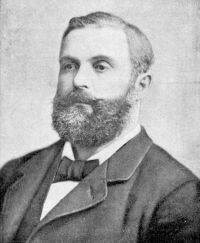
Ernst Joly

Biographical details

Ernst Joly 1922 Encyclopædia Britannica (1922)

Count Bothmer's German Corps in touch with it pressed forward successfully before Stryj. Hofmann's Austro-Hungarian corps also made progress N. of Dolina. Gen. Gerok's XXIV. German Reserve Corps fighting on the right wing to the S.W. of Dolina, on the other hand, beat off all attacks. As on the second day, however, the Russians everywhere maintained their strong positions with the utmost stubbornness, the attack was brought to a standstill, and recourse had to be made to sapping, as on the II. Army front.
Source: Wikisource

Ernst Joly 1922 Encyclopædia Britannica (1922)

A favourable influence on the situation on the right wing had been exercised by the break-through achieved by Mackensen's Army Group, after the battle of Przemysl, at Mosciska and Lubaczow.
The Break-through at Mosciska and Lubaczow (June 12-15) . After the fall of Przemysl, the armies of Mackensen, Puhallo and Bohm pursued Brussilov's army with rapidly succeeding attacks until June 5. On the heights W. and S.W. of Mosciska, as far as Wielki Bloto on the one hand and on the Middle and Lower Lubac- zowka on the other, Brussilov hoped again to hold up the Austro- German advance.
Source: Wikisource

Ernst Joly 1922 Encyclopædia Britannica (1922)

The southern front was connected by an equally strong fortified line through Husaków and Krukienice with the Dniester, which served as the next natural line of defence for the Russians. At first, however, they did not make full use of this river as an obstacle, since they advanced their IX. Army against Pflanzer-Baltin to the Pruth.
The immediate object of the Austrian and German High Commands was to force the San below Przemysl, and to attack that fortress. The following objectives were assigned to the armies.
Source: Wikisource

Get perspective with Kwize: daily news enlightened by great literature