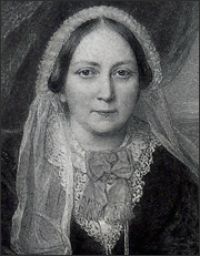
Frank Wilson Cheney Hersey

Biographical details

Frank Wilson Cheney Hersey The Harvard Classics Vol. 51 (1914)

Carlyle soon appeared, and looked as if he felt a well-dressed London audience scarcely the arena for him to figure in as a popular lecturer. He is a tall, robust-looking man; rugged simplicity and indomitable strength are in his face, and such a glow of genius in it—not always smouldering there, but flashing from his beautiful gray eyes, from the remoteness of their deep setting under that massive brow.
Source: Wikisource

Frank Wilson Cheney Hersey The Harvard Classics Vol. 51 (1914)

It was Newman's staunch belief in what is intuitive and instinctive that made him accept the wisdom of the race as more trustworthy than the reason of the individual. Consequently he believed that Christian truth is preserved not by the reasoning of the individual but by the diversified powers, insight, and feeling which are found in a long-continuing society. For Newman, therefore, the Catholic Church was the articulate voice of the body of Christian believers in the past—"the concrete representative of things invisible."
Source: Wikisource

Frank Wilson Cheney Hersey The Harvard Classics Vol. 51 (1914)

CARLYLE AND HIS TEACHING
With Newman, Carlyle had little sympathy. "John Henry Newman," he said, "has not the intellect of an average-sized rabbit." Carlyle's own life [4] was spent in writing the histories of great movements such as the French Revolution, and of great men such as Cromwell and Frederick the Great. He thundered forth denunciations of the evils of society. The gospel he preached was of Books, Silence, Work, and Heroes. "In Books lie the soul of the whole Past Time." "Silence is the eternal Duty of a man." "Work while it is called To-day."
Source: Wikisource

Get perspective with Kwize: daily news enlightened by great literature