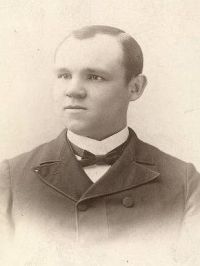
Friedrich von Hügel

Biographical details

Friedrich von Hügel 1911 Encyclopædia Britannica, Volume 15… (1911)

Only some such position as Abbé Loisy’s critical summing up (1903) brings out its specific greatness. “What the author was, his book, in spite of himself, tells us to some extent: a Christian of Judeo-Alexandrine formation; a believer without, apparently, any personal reminiscence of what had actually been the life, preaching and death of Jesus; a theologian far removed from every historical preoccupation, though he retains certain principal facts of tradition without which Christianity would evaporate into pure ideas; and a seer who has lived the Gospel which he propounds.”
Source: Wikisource

Friedrich von Hügel 1911 Encyclopædia Britannica, Volume 15… (1911)

Thus a super-spatial and super-temporal interpretation of that first markedly Jewish setting and apprehension of the Christian truth became as necessary as the attachment to the original contingencies. The Fourth Gospel, inexplicable without St Paul and the fall of Jerusalem, is fully understandable with them. The attribution of the book to an eye-witness nowhere resolves, it everywhere increases, the real difficulties; and by insisting upon having history in the same degree and way in John as in the Synoptists, we cease to get it sufficiently anywhere at all.
Source: Wikisource

Friedrich von Hügel 1911 Encyclopædia Britannica, Volume 15… (1911)

For in this Logos is Life, and this Life is a Light which, though shining in darkness, cannot be suppressed by it. This true Light became flesh and tabernacled amongst us; and we beheld His glory, as of an Only-Begotten from the Father, full of grace and truth. John the Baptist testified concerning Him, the Logos-Light and Logos-Life incarnate
Source: Wikisource

Get perspective with Kwize: daily news enlightened by great literature