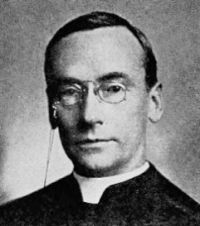
James Aloysius Burns

Biographical details

Portrait of James Aloysius Burns James Aloysius Burns Catholic Encyclopedia (1913)

Alcuin was eminently qualified to be the schoolmaster of his age. Although living in the world and occupied much with public affairs, he was a man of singular humility and sanctity of life. He had an unbounded enthusiasm for learning and a tireless zeal for the practical work of the class-room and library, and the young men of talent whom he drew in crowds around him from all parts of Europe went away inspired with something of his own passionate ardour for study.
Source: Wikisource

Portrait of James Aloysius Burns James Aloysius Burns Catholic Encyclopedia (1913)

Charlemagne himself, his queen, Luitgard, his sister Gisela, his three sons and two daughters became pupils of the school, an example which the rest of the nobility were not slow to imitate. Alcuin's supreme merit as an educator lay, however, not merely in the training up of a generation of educated men and women, but above all, in inspiring with his own enthusiasm for learning and teaching the talented youths who flocked to him from all sides.
Source: Wikisource

Portrait of James Aloysius Burns James Aloysius Burns Catholic Encyclopedia (1913)

I. Educator and Scholar.—Of his work as an educator and scholar it may be said, in a general way, that he had the largest share in the movement for the revival of learning which distinguished the age in which he lived, and which made possible the great intellectual renaissance of three centuries later. In him Anglo-Saxon scholarship attained to its widest influence, the rich intellectual inheritance left by Bede at Jarrow being taken up by Alcuin at York, and, through his subsequent labours on the Continent, becoming the permanent possession of civilized Europe.
Source: Wikisource

Get perspective with Kwize: daily news enlightened by great literature