“ The historian, in fact, is engaged in the study of an unfinished organism, whose development is constantly presenting him with surprises. It is as if the biologist were suddenly to come upon new and unheard-of species and families which would upset his old classification, or as if the chemist were to find his laws of combination replaced by others which were not only unknown to him, but which were really new and recent in the world. Other inquirers have the whole of the phenomena with which their science is concerned before them, and they may explore them at their leisure. ”
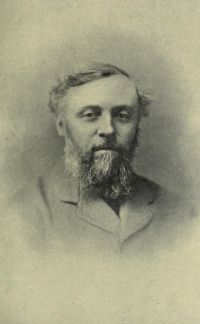
James Cotter Morison
Biographical details

James Augustus Cotter Morison (1832–1888), an English essayist and historian, is renowned for his incisive historical analyses and essays grounded in positivist philosophy. His work Gibbon (1878), part of the Men of Letters series, exemplifies his rigorous examination of historical figures, blending admiration for their achievements with critical evaluation of their shortcomings.
Themes of human thought’s evolution, the tension between faith and reason, and the intricacies of historical narrative permeate his writings. Morison’s integration of positivist principles with a refined appreciation for historical context underscores his enduring significance in scholarly discourse.
Quotes by James Cotter Morison
“ The destruction of Rome was not only a destruction of an empire, it was the destruction of a phase of human thought, of a system of human beliefs, of morals, politics, civilisation, as all these had existed in the world for ages. The drama is so vast, the cataclysm so appalling, that even at this day we are hardly removed from it far enough to take it fully in. The mind is oppressed, the imagination flags under the load imposed upon it. ”
“ In the Exposition, a specious apology, the orator assumes with consummate art the tone of candour and simplicity, and the ten horned monster is transformed at his magic touch into the milk-white hind, who must be loved as soon as she is seen. In the History, a bold and well-aimed attack, he displays, with a happy mixture of narrative and argument, the faults and follies, the changes and contradictions of our first Reformers, whose variations, as he dexterously contends, are the mark of historical error, while the perpetual unity of the Catholic Church is the sign and test of infallible truth. ”