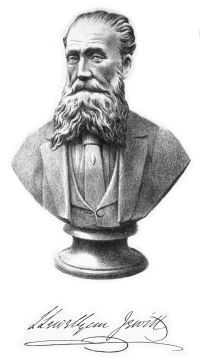
Josiah C. Wedgwood

Biographical details

Josiah C. Wedgwood Staffordshire pottery and its history

Wedgwood’s financial success with his Jasper and Black Etruscan ware, a success hitherto quite unique in the experience of the Potteries, led every potter of any capacity to attempt the same lines. They cannot be blamed for trying to imitate what was demanded by the fashionable market. The whole progress of the industry had been based upon the copying of successful processes, and Wedgwood did not patent his patterns or methods, even could he have done so.
Source: Gutenberg

Josiah C. Wedgwood Staffordshire pottery and its history

Till 1740 the same clay body served for both salt glaze and lead glaze, but about this time manufacturers began to specialize in either salt or lead glaze, and to use different bodies and mixtures to suit the varied glazes.
And, just as they had to arrange to import clays, so they had also to arrange to export their wares. A London agent, a Liverpool agent, perhaps a Birmingham agent became necessary. This sort of business could no longer be carried on by a master potter on sixteen shillings a week. The master potter became a capitalist.
Source: Gutenberg

Josiah C. Wedgwood Staffordshire pottery and its history

As no potter, so goes the story, had ever had more than one oven, their inventive faculty went no farther than to construct a larger oven than usual. The pioneer, whoever he was, built a new one so large that it collapsed, to the great joy of his conservative rivals. Soon afterwards, however, the Baddeleys, said to have been the sons of a Moddershall flint-grinder, put up behind their factory at Shelton a row of no fewer than four ovens; and about 1743, Thomas and John Wedgwood, known as “of the Big House,” built a tiled factory with five ovens.
Source: Gutenberg

Get perspective with Kwize: daily news enlightened by great literature