“ If you resolve on this, my dear Miss Milner, you are undone at once—you may thus hurry yourself into a marriage with a man you do not love, and the misery of your whole future life may be the result. Or, would you force Mr. Dorriforth (I mean Lord Elmwood) to another duel with my Lord Frederick?”“No, call him Dorriforth,” answered she, with the tears stealing from her eyes; “I thank you for calling him so; for by that name alone, is he dear to me.”“Nay, Miss Milner, with what rapture did you not receive his love, as Lord Elmwood!” ”
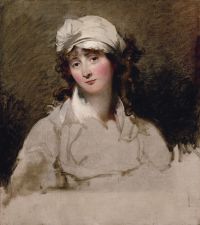
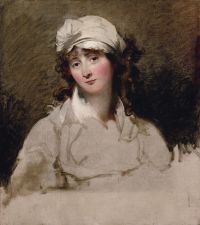
Mrs. Inchbald
Biographical details

Elizabeth Inchbald (1753–1821), an English novelist, dramatist, and actress, navigated the tensions between political radicalism and social convention through her literary and theatrical works. Her novels A Simple Story (1791) and Nature and Art (1796) explore themes of morality, self-determination, and emotional conflict, reflecting her radical associations and critiques of societal norms.
A productive playwright, she translated and adapted numerous French and German farces, including Lovers’ Vows (1798), which ignited moral debates. Her career, marked by perseverance and intellectual independence, underscores her lasting significance in 18th-century women’s writing.
Quotes by Mrs. Inchbald
“ MR. ANHALT. At the Castle. AGATHA. And still unknown? MR. ANHALT. Now he is known—an explanation has taken place;—and I am sent here by the Baron, not to a stranger, but to Agatha Friburg—not with gold! his commission was—“do what your heart directs you.” AGATHA. How is my Frederick? How did the Baron receive him? MR. ANHALT. I left him just in the moment the discovery was made. By this time your son is, perhaps, in the arms of his father. AGATHA. Oh! is it possible that a man, who has been twenty years deaf to the voice of nature, should change so suddenly? ”
“ The more sincerely you loved, the more you plunged in danger: from one ungoverned passion proceeded a second and a third. In the fervency of affection you yielded up your virtue! In the excess of fear, you stained your conscience by the intended murder of your child! And now, in the violence of grief, you meditate—what?—to put an end to your existence by your own hand!After casting her thoughts around, anxious to find some bud of comfort on which to fix her longing eye; she beheld, in the total loss of William, nothing but a wide waste, an extensive plain of anguish. ”