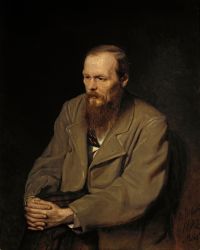
Paul of Aleppo

Biographical details

Paul of Aleppo The Travels of Macarius, Patriarch of Antioch (1836)

To the industrious pursuit of more profitable labours, opening the road to fresh information, and unbounded communication of thought and language—to the display of feelings and propensities, as they are diversified by clime, and promoted by the suggestions of various education, so necessary to be contemplated in the happy government of the human race—the encouragement now given is the foundation of a new æra in the dynasty of Science, and venturous explorers may now strike out from the beaten track of the circulating shores of the Mediterranean.
Source: Wikisource

Paul of Aleppo The Travels of Macarius, Patriarch of Antioch… (1836)

As a record of the early struggles of the Muscovites for empire against their natural enemies the Poles, so steadily and triumphantly maintained by the Czar Alexius, whose sword of conquest is still wielded by his successors to the present time, the writings of the Archdeacon will be found to be of considerable value: nor, as far as I have been able to discover, is there any document extant of equally curious authenticity, as regarding the distinctive policy and prescriptive maxims of that Colossus of Modern History, the Russian Government.
Source: Wikisource

Paul of Aleppo The Travels of Macarius, Patriarch of Antioch (1836)

Between the Seraglio and Saint Sophia is a small church named after Saint John the Baptist, which the Emperor Justinianus built before he began Saint Sophia, and where he used to repose himself. It remains in its pristine state.
Then we went to see the third Tekelli Dash; which is in the Taouk Bazaar, or Bird Market, near the Walidah Baths and the Khan of the Ambassadors. It rises so high into the air as to be painful to behold; and, having been cracked by fire, is swathed in hoops of iron.
Source: Wikisource

Get perspective with Kwize: daily news enlightened by great literature