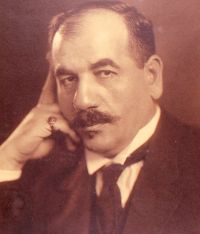
Philip L. Gell & Charles Eliot

Biographical details

Philip L. Gell & Charles Eliot 1911 Encyclopædia Britannica (1911)

Throughout the 6th century Khazaria was the mere highway for the wild hordes to whom the Huns had opened the passage into Europe, and the Khazars took refuge (like the Venetians from Attila) amongst the seventy mouths of the Volga. The pressure of the Turks in Asia precipitated the Avars upon the West. The conquering Turks followed in their footsteps (560–580) . They beat down all opposition, wrested even Bosporus in the Crimea from the empire, and by the annihilation of the Ephthalites completed the ruin of the White Race of the plains from the Oxus to the Don.
Source: Wikisource

Philip L. Gell & Charles Eliot 1911 Encyclopædia Britannica (1911)

So important was this traffic held at Constantinople that, when the portage to the Don was endangered by the irruption of a fresh horde of Turks (the Petchenegs) , the emperor Theophilus himself despatched the materials and the workmen to build for the Khazars a fortress impregnable to their forays (834) . Famous as the one stone structure is in that stoneless region, the post became known far and wide amongst the hordes of the steppe as Sar-kel or the White Abode. Merchants from every nation found protection and good faith in the Khazar cities.
Source: Wikisource

Philip L. Gell & Charles Eliot 1911 Encyclopædia Britannica (1911)

During the 4th century however, the growing power of Persia culminated in the annexation of eastern Armenia. The Khazars, endangered by so powerful a neighbour, passed from under Persian influence into that remote alliance with Byzantium which thenceforth characterized their policy, and they aided Julian in his invasion of Persia (363) . Simultaneously with the approach of Persia to the Caucasus the terrible empire of the Huns sprang up among the Ugrians of the northern steppes.
Source: Wikisource

Get perspective with Kwize: daily news enlightened by great literature