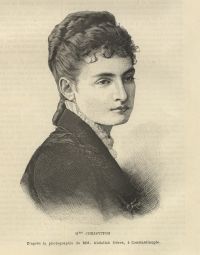
Martin Theodoor Houtsma

Biographical details

Martin Theodoor Houtsma,  1911 Encyclopædia Britannica (1911)

“ Masūd, the son of Izz ed-dīn, who on the death of his father had fled from the Crimea to the Mongol khān and had received from him the government of Sivās, Erzingān and Erzerūm during the lifetime of Kaikhosrau III., ascended the Seljūk throne on the death of Kaikhosrau. But his authority was scarcely respected in his own residence, for several Turkish amirs assumed independence and could only be subdued by Mongol aid, when they retired to the mountains, to reappear as soon as the Mongols were gone. ”
Source: Wikisource

Martin Theodoor Houtsma,  Encyclopædia Britannica, Ninth Edition (1888)

“ To the former, as also to the Arabs, it has a collective sense like Scythians or Huns; [1] at the present day we are wont to restrict the name to the Osmanli Turks, though they themselves refuse to be called Turks, having, as they hold, ceased to be such in becoming imbued with Arabo-Persian culture. On the other hand, when we speak of Uigurs and Tatars, we mean tribes who style themselves Turks and really are such. It is only by the aid of historical and linguistical evidence that we can determine the true limits of the Turkish name. ”
Source: Wikisource

Martin Theodoor Houtsma,  1911 Encyclopædia Britannica (1911)

“ Kilij Arslān lived two years longer, finally under the protection of his youngest son, Kaikhosrau, who held the capital after him (till 1199) until his elder brother, Rukneddin Suleimān, after having vanquished his other brothers, ascended the throne and obliged Kaikhosrau to seek refuge at the Greek emperor's court. This valiant prince saved the empire from destruction and conquered Erzerūm, which had been ruled during a considerable time by a separate dynasty, and was now given in fief to his brother, Mughīt ud-dīn Toghrul Shāh. ”
Source: Wikisource

Get perspective with Kwize: daily news enlightened by great literature