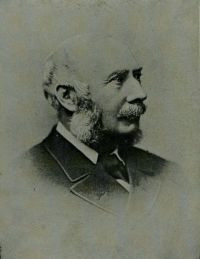
Richard Manliffe Barrington

Biographical details

Richard Manliffe Barrington Report on the Migration of Birds in the Spring and Autumn of 1883…

We had a succession of black nights going up the river, and it was observable that whenever we landed and suddenly inundated the trees with the intense sun-burst of the Electric Light, a certain curious effect was always produced: hundreds of birds flocked instantly out from the masses of shining green foliage, and went careering hither and thither through the white rays, and often a song bird turned up and fell to singing.
Source: Gutenberg

Richard Manliffe Barrington Report on the Migration of Birds in the Spring and Autumn of 1882…

The Sea-parrot does not lay more than one egg unless it is taken away, when another is laid at the end of a week, and if this is taken away another egg is laid; then no more are laid that year. The young remain in their holes until they are fully feathered. They leave them in July, and are well guarded in the sea by the old birds. It is my opinion they do not ascend on the island any more after they have left their holes. The only way the young birds are distinguished from the old ones the following spring is that their feet are still a little black.
Source: Gutenberg

Richard Manliffe Barrington Report on the Migration of Birds in the Spring and Autumn of 1881…

Nothing is more remarkable in the phenomenon of migration than the punctuality with which certain species return in the autumn, one species regularly taking precedence of another; also in respect to the date of the arrival year after year. In the Limicolæ and Anatidæ the date of autumn migration varies—often considerably—from year to year. In some species, as the Wheatear, Redstart, Fieldfare, Redwing, Hooded Crow, Goldcrest and Woodcock, and others, we may almost predict to a day the time of their first appearance.
Source: Gutenberg

Get perspective with Kwize: daily news enlightened by great literature