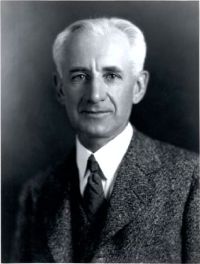
Robert Mearns Yerkes

Biographical details

Portrait of Robert Mearns Yerkes Robert Mearns Yerkes,  The Dancing Mouse: A Study in Animal Behavior

“ I noticed, in this test of the animal's ability to learn, that while one individual would be scurrying about trying all ways of escape, investigating its surroundings, looking, sniffing, and dancing by turns, another would devote all its time to whirling, circling, or washing itself. One in the course of its activity would happen upon the way of escape, the other by reason of the limited scope of its activity, not the lack of it, would fail hour after hour to discover even the simplest way of getting back to its nest, to food, and to its companions. ”
Source: Gutenberg

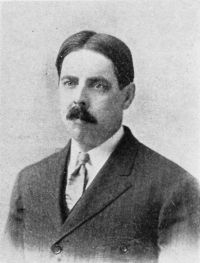
Portrait of Robert Mearns Yerkes Robert Mearns Yerkes,  The Dancing Mouse: A Study in Animal Behavior

“ In view of this impressive instance of the way in which averages may conceal facts and lead the observer to false inferences, I wish to remark that my study of the dancer has convinced me of the profound truth of the statement that the biologist, whether he be psychologist, anthropologist, physiologist, or morphologist, should work with the organic individual and should first of all deal with his results as individual results. Averages have their place and value, but to mass data before their individual significance has been carefully sought out is to conceal or distort their meaning. ”
Source: Gutenberg

Portrait of Robert Mearns Yerkes Robert Mearns Yerkes,  The Mental Life of Monkeys and Apes…

“ For our knowledge of behavior has come mostly from naturalistic observation, scarcely at all from experimentation; our knowledge of social relations is obviously meager and of uncertain value; and finally, our knowledge of mind is barely more than a collection of carelessly drawn inferences.
This picture of the status of scientific work on the primates, although not overdrawn, will doubtless surprise many readers, and even the biologist may find himself wondering why we are so ignorant concerning the lives of the organisms most nearly akin to us, and naturally of deepest interest to us.
”
Source: Gutenberg

Get perspective with Kwize: daily news enlightened by great literature