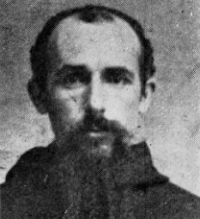
Siméon Vailhé

Biographical details

Portrait of Siméon Vailhé Siméon Vailhé Catholic Encyclopedia (1913)

The massacre of all the Berber chiefs of the Levathes, treacherously ordered by Duke Sergius at Leptis Magna in 543, provoked a terrible insurrection, through which the Romans almost lost Africa. Taken in the seventh century by the Arabs, who allowed it to be invaded by the sands, Leptis Magna is now only a majestic ruin called Lebda, sixty-two miles east of Tripoli. Besides vague traces of several large buildings, the remains of a vast circus, 380 yards by sixty-six yards, are visible.
Source: Wikisource

Portrait of Siméon Vailhé Siméon Vailhé Catholic Encyclopedia (1913)

Leptis Magna, a titular see of Tripolitana. Founded by the Sidonians in a fine and fertile country, it was the most important of the three towns which formed the Tripoli Confederation. The remains of the ancient Phœnician town are still visible, with the harbour, quays, walls, and inland defence, which make it look like Carthage. This Semitic city subsequently became the centre of a Greek city, Neapolis, of which most of the monuments are buried under sand.
Source: Wikisource

Portrait of Siméon Vailhé Siméon Vailhé Catholic Encyclopedia (1913)

Leptis allied itself with the Romans in the war against Jugurtha. Having obtained under Augustus the title of civitas it seems at that time to have been administered by Carthaginian magistrates; it may have been a municipium during the first century of the Christian Era and erected by Trajan into a colony bearing the name of Colonia Ulpia Trajana, found on many of its coins.
Source: Wikisource

Get perspective with Kwize: daily news enlightened by great literature