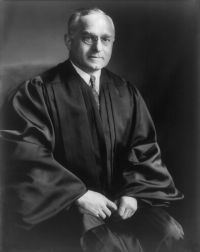
by Anthony Kennedy

Biographical details

by Anthony Kennedy FCC v. Fox Television Stations… (2012)

This regulatory history, however, makes it apparent that the Commission policy in place at the time of the broadcasts gave no notice to Fox or ABC that a fleeting expletive or a brief shot of nudity could be actionably indecent; yet Fox and ABC were found to be in violation. The Commission’s lack of notice to Fox and ABC that its interpretation had changed so the fleeting moments of indecency contained in their broadcasts were a violation of §1464 as interpreted and enforced by the agency “fail [ed] to provide a person of ordinary intelligence fair notice of what is prohibited.”
Source: Wikisource

by Anthony Kennedy FCC v. Fox Television Stations… (2012)

Even when speech is not at issue, the void for vagueness doctrine addresses at least two connected but discrete due process concerns: first, that regulated parties should know what is required of them so they may act accordingly; second, precision and guidance are necessary so that those enforcing the law do not act in an arbitrary or discriminatory way.
Source: Wikisource

by Anthony Kennedy FCC v. Fox Television Stations… (2012)

Turning to the isolated nature of the expletive, the Commission reversed prior rulings that had found fleeting expletives not indecent. The Commission held “the mere fact that specific words or phrases are not sustained or repeated does not mandate a finding that material that is otherwise patently offensive to the broadcast medium is not indecent.”
Source: Wikisource

Get perspective with Kwize: daily news enlightened by great literature