Expletive

Definition and stakes

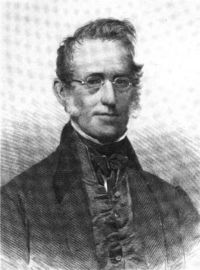
Portrait of William Graham Sumner William Graham Sumner,  Folkways

“ There may be some psychology of expletives,410 but they seem to be accounted for, like slang, by the expediency of expression, which is the purpose of all language. There is a need for expression which will win attention and impress the memory. A strong expletive shocks an opponent, or it is an instinctive reaction on a situation which threatens the well-being of the speaker. It is a vent to emotion which gives relief from it when other relief is not possible. ”
Source: Gutenberg

Thomas Newbigging,  Lancashire Humour

“ It is an objectionable habit, doubtless, even when no irreverence is intended. Curiously enough, instead of being employed to express aversion to the object to which it is applied, the expletive is often used as a term of endearment. For example, we sometimes hear the expression: "He's a clever little devil!" applied by a father in admiration of the budding intelligence of his own little boy. An anecdote will best exhibit this peculiar turn of speech. ”
Source: Gutenberg

Frank Edgar Farley,  An Advanced English Grammar with Exercises

“ It often serves as grammatical subject merely to introduce the verb is, the real subject of the thought standing in the predicate. In this use it is called an expletive (or “filler”) .
It is he. It is Christmas. It was a tiresome ride.
In these examples, the subject of the thought (he, Christmas, ride) appears as a predicate nominative.
3. The antecedent of it is often a group of words.
Wearing tight shoes is foolish. It deforms the feet.
121. In imperative sentences the subject (you) is commonly omitted: as,—“Shut the door.”
”
Source: Gutenberg

Get perspective with Kwize: daily news enlightened by great literature