 Thomas Bailey Aldrich,
Ponkapog Papers
Thomas Bailey Aldrich,
Ponkapog Papers
“ True art selects and paraphrases, but seldom gives a verbatim translation. ”
Paraphrasing, the practice of rewording ideas while maintaining their core meaning, has long been central to literary and rhetorical scholarship. Writers such as Thomas Bailey Aldrich underscored its significance in the careful selection of language, while Anna K. Howard illustrated how shifts in emphasis can alter meaning. F. V. N. Painter connected it to structural and thematic coherence, and Goethe highlighted the dual nature of language—its ability to clarify and to obscure.
Edwin Gordon Lawrence emphasized its value in sharpening expression and reasoning, and Charles H. Caffin pointed to its power to convey depth through implication. Taken together, these viewpoints portray paraphrasing as a link between accuracy and interpretation, influencing how ideas are both communicated and understood across different texts and situations.
Thomas Bailey Aldrich,
Ponkapog Papers
“ True art selects and paraphrases, but seldom gives a verbatim translation. ”
Anna K. Howard, The Canadian Elocutionist
“ When delivered in a cool and deliberate manner, it is a very plain sentence, conveying no emotion, nor emphasis, nor interrogation. But when one of the words is emphasized, the sentence will be very different from what it was in the first instance; and very different, again, when another word is made emphatic; and so, again, whenever the emphasis is changed, the meaning is also changed: as, "THOU art a man." That is thou in opposition to another, or because thou hast proved thyself to be one. "Thou art a MAN." That is a gentleman. "Thou ART a man." ”
F. V. N. Painter, Elementary Guide to Literary Criticism
“ These principles pertain to diction, structure, matter, and spirit or purpose. No one will deny [4] that the diction should be well chosen; that the structure of the sentences should be correct and clear; and that, in the case of poetry, the laws of versification should be observed. These elements contribute to excellence of form. In addition to these external elements there should be unity of thought, symmetry of presentation, truth of statement, and sincerity and self-restraint in sentiment. These elements give substantial worth to the matter or content of literature. ”
 Johann Wolfgang von Goethe,
Faust
(1925)
Johann Wolfgang von Goethe,
Faust
(1925)
“ Hear, therefore, one alone, for that is best, in sooth, And simply take your master's words for truth. On words let your attention centre! Then through the safest gate you'll enter The temple-halls of Certainty. STUDENT Yet in the word must some idea be. MEPHISTOPHELES Of course! But only shun too over-sharp a tension, For just where fails the comprehension, A word steps promptly in as deputy. With words 'tis excellent disputing; Systems to words 'tis easy suiting; On words 'tis excellent believing; No word can ever lose a jot from thieving. ”
Anna K. Howard, The Canadian Elocutionist
“ As, also, a GUTTURAL emphasis may be applied to express anger, scorn, or loathing. These are some of the different meanings which may be given to this sentence of four words by the voice. A good reader, or speaker, then, ought not only to be able to sound every word correctly; he ought to know, always, the EXACT meaning of what he reads, and feel the sentiment he utters, and also to know HOW to give the intended meaning and emotion, when he knows them. ”
Charles H. Caffin, The Story of Dutch Painting
“ Then, again, we have discovered that often we are made to feel most deeply, not by detailed statement, but by suggestion: in the case of a speaker, perhaps by a momentary gesture, or play of features, by a sudden inflection of the voice, or a pause in speech, and the occasional accent of a word or sentence; in the case of a writer, often as much by what he leaves unsaid, by the thought that is veiled behind the statement, by the choice and emphasis of certain features of his record. Further, we may have learned to find occasional value even in uncertainty or indecision. ”
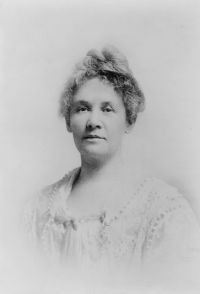 Alice Brown,
The Day of His Youth
Alice Brown,
The Day of His Youth
“ Zoe Montrose to Francis Hume Do not write verse until you fail to express yourself in prose. Verse should glide full-winged over the surface of the waters where the spirit of God lies sleeping. It should deal carelessly with poor things like prepositions and pronouns. They are but the spray-bubbles beaten back by its wings. Your smaller words are staffs falling as regularly and heavily as a tread on a board walk. Your phrases march; they do not fly. ”
Edwin Gordon Lawrence, How to Master the Spoken Word
“ Our patriots would have died on the gallows, their children would have been deprived of their inheritance, and no cruelty would have been too great for the conquering nation to have inflicted upon her rebellious colonies.What good is to be derived from paraphrasing?It trains the mind through the exercising of the power of mental concentration that is necessary in order to hold on to the thought; it helps to form the habit of constructing a framework; it aids in making a speaker arrange his thoughts consecutively; it improves the speaker’s style, and it enlarges his vocabulary. ”
Edwin Gordon Lawrence, How to Master the Spoken Word
“ He employs [p. 2] the series, the contrasts (single, double, and triple) , the conditional, the negative, the positive, and, in fact, all the known forms of arranging words so as to make them best express the orator’s meaning. Here is an effective concluding series he uses: “A city is adorned by good citizenship, the body by beauty, the soul by wisdom, acts by virtue, and speech by truthfulness,” and he follows this sentence with the following one: “But the opposites of these virtues are a disgrace.” ”
Edwin Gordon Lawrence, How to Master the Spoken Word
“ They may not, at first, be the best possible words, but words that will answer the purpose of carrying the thought to the mind of the listener will flow freely, and with study and practice the vocabulary will become larger and more effective. [p. 105] Paraphrasing helps to develop the imaginative quality by cultivating the power of producing mental images, seeing with the mind’s eye, as it were. If a speaker will hold on to his picture or his theme, he will have no trouble in drawing the one or developing the other. ”
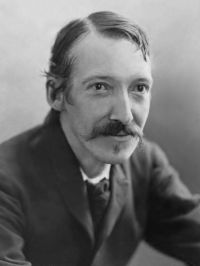 Robert Louis Stevenson,
Essays in the Art of Writing
(1905)
Robert Louis Stevenson,
Essays in the Art of Writing
(1905)
“ We begin to see now what an intricate affair is any perfect passage; how many faculties, whether of taste or pure reason, must be held upon the stretch to make it; and why, when it is made, it should afford us so complete a pleasure. From the arrangement of according letters, which is altogether arabesque and sensual, up to the architecture of the elegant and pregnant sentence, which is a vigorous act of the pure intellect, there is scarce a faculty in man but has been exercised. ”
Henry Ware, Hints on extemporaneous preaching
“ To be compelled to shape the course of remark so as to suit a sentence which is by and by to come, or to introduce certain expressions which are waiting for their place, is a check to the natural current of thought. ”
 Ralph Waldo Emerson,
Essays: First Series — The Over-Soul
(1841)
Ralph Waldo Emerson,
Essays: First Series — The Over-Soul
(1841)
“ O, believe, as thou livest, that every sound that is spoken over the round world, which thou oughtest to hear, will vibrate on thine ear! Every proverb, every book, every byword that belongs to thee for aid or comfort, shall surely come home through open or winding passages. ”
 Meredith Nicholson,
Style and the Man
(1911)
Meredith Nicholson,
Style and the Man
(1911)
“ Eloquence is, I have sometimes thought, the rarest quality that may be embraced in the essentials of style. We need not quibble over definitions. “Eloquence,” said Dean Farrar, “is the noble, the harmonious, the passionate expression of truths profoundly realized, or of emotions intensely felt”; and it is sufficient for our purposes. The term is applied commonly and uncritically in oratory. I have not myself found the reading of the speeches of great orators profitable, charmed they never so marvelously in their own day. ”
Edward Forbes, The Palace and Park
“ All beauties of language, all flights of poetry, all particular scenes and speeches, powerful and impressive as they may be, are merely subordinate. No character, how exquisitely or elaborately soever conceived and finished, is drawn for itself ”
Henry Davenport Northrop, New Century Speaker and Writer… (1901)
“ Having pointed out the importance of correct grammar and the right choice of language, I wish now to furnish you with some practical suggestions for the construction of sentences. Remember that a good thought often suffers from a weak and faulty expression of it.Your sentences will certainly shape themselves after the structure of your own mind. If your thoughts are vivid and definite, so will be your language; if dreamy and hazy, so will your composition be obscure. Your speech, whether oral or written, can be but the expression of yourself; and what you are, that speech will be. ”
Richard Green Parker, Parker's Second Reader
“ Now, if these lines were written in prose, the words would stand in the following order: "O my God! when my rising soul surveys all thy mercies, I'm transported with the view of them, and lost in wonder, love and praise."16. And now that I have explained to you a few of the points in which verse differs from prose, I will only add, that when you read verse, you must not stop at the end of every line, unless there is a pause or mark there; and that you must avoid reading it as if you were singing it to a tune. [Pg 121] LESSON XXXII. God Present Everywhere. ”
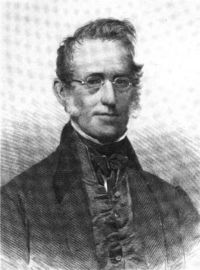 Goold Brown,
The Grammar of English Grammars
Goold Brown,
The Grammar of English Grammars
“ Through lack of such discernment, gross faults are very often committed. For neither to all ranks, fortunes, and ages, nor to every time, place, and auditory, can the same style either of language or of sentiment be adapted. In every part of a discourse, as in every part of life, we must consider what is suitable and decent; and this must be determined with reference both to the matter in question, and to the personal character of those who speak and those who hear."—CICERO, Orator ad Brutum. ”
Marcus Cornelius Fronto, The Correspondence of Marcus Cornelius Fronto… (1920)
“ Provide yourself rather with speech worthy of the thoughts you draw from philosophy, and the more noble your thoughts, the more impressive will your utterance be. Nay, lift yourself up and stand upright, and shake off with your strong top those tree-twisters who are bending you down, like a fir or stately alder, and lowering you to the level of stunted bushes, and make trial whether you have anywhere swerved from the right way. But summon Eloquence, the handmaid of philosophy, and cast away those crooked, twisted modes of speech . ”
Edwin Gordon Lawrence, How to Master the Spoken Word
“ A carrying out of this principle will enable an extempore speaker to form his matter with perfect ease, and this is one reason why paraphrasing is beneficial to the student of public speaking. It is a valuable stepping stone that should be used by all in attempting to attain proficiency in the art of expressing thought by means of the spoken word. ”
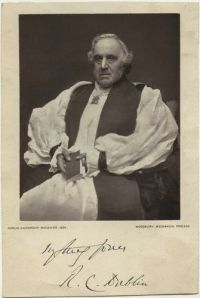 Richard Chenevix Trench,
Proverbs and Their Lessons
Richard Chenevix Trench,
Proverbs and Their Lessons
“ In the justifying of the paradox, in the extricating of the real truth from the apparent falsehood of the statement, in the answer to the appeal made here to the imagination,—an appeal and challenge which, unless it be responded to, the proverb must remain unintelligible to us,—in all this there is a process of mental activity, oftentimes so rapidly exercised as scarcely to be perceptible, yet not the less carried on with a pleasurable excitement. ”
 Georg Wilhelm Friedrich Hegel,
The Philosophy of Fine Art, volume 2…
Georg Wilhelm Friedrich Hegel,
The Philosophy of Fine Art, volume 2…
“ The proverb forms as it were the middle point of this sphere. In the form of their execution, that is to say, proverbs lean at one time in the direction of the fable, at another to that of the apologue. They give us a particular case selected for the most part from the daily walk of mankind, which, however, is to be interpreted universally. Take the example, "One hand washes the other," or those others, "Every one wheels before his own door," "Who digs a grave for another, falls into it himself," "Bake a pudding for me and I will staunch your thirst," and others like them. ”
Samuel Johnson — Appreciations and Testimonia
“ His phraseology rolls ever in solemn and majestic periods, in which every substantive marches ceremoniously accompanied by its epithet; grand pompous words peal like an organ; every proposition is set forth balanced by a proposition of equal length; thought is developed with the compressed regularity and official splendour of a procession. ”
Richard Chenevix Trench,
English Past and Present
“ Notice another example of this willingness to dispense with inflection, of this endeavour on the part of the speakers of a language to reduce its forms to the fewest possible, consistent with the accurate communication of thought. Of our adjectives in ‘en’, formed on substantives, and expressing the material or substance of a thing, some have gone, others are going, out of use; while we content ourselves with the bare juxtaposition of the substantive itself, as sufficiently expressing our meaning. ”
Richard Hurd, The works of Richard Hurd, volume 2…
“ But, of all the means of adorning and enlivening a discourse by words, which are infinite, and perpetually grow upon us, as our knowledge of the tongue, in which we write, and our skill in adapting it to the ends of poetry, increases, there is none that pleases more, than figurative expression. ”
Richard Chenevix Trench,
Proverbs and Their Lessons
“ This much of truth they who made the assertion certainly had; namely, that the employment of the concrete instead of the abstract is one of the most frequent means by which it obtains and keeps its popularity; [18] for so the proverb makes its appeal to the whole man—not to the intellectual faculties alone, but to the feelings, to the fancy, or even to the imagination, as well, stirring the whole man to pleasurable activity. ”
“ In a bad attack, she may go to bed young one night and rise next day with grey hairs in her head, and write a book about it; but then she recovers: and I think you are right about phrases, too. 'Syllables govern the world,' John Selden said; but 'phrases' would have been the better word. Phrases are the keynotes to life; they set the tune to which men insensibly shape their course, and so rule us for good and ill. ”
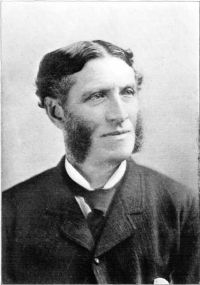 Matthew Arnold,
On Translating Homer
Matthew Arnold,
On Translating Homer
“ Phrases, which are not in themselves bad, if they were elevated by something in the syntax or rhythm distinguishing them from prose, become in him prose out-and-out. ‘To Peleus why did we give you, to a mortal’? ‘In the plain there were kindled a thousand fires; by each one there sate fifty men’. ”
J. H. Gardiner, The Making of Arguments
“ The value of the figure of speech is chiefly in giving expression to feelings which cannot be set forth in abstract words, the whole of whose meaning can be defined: in the connotation of words—that indefinable part of their meaning which consists in their associations, implications, and general emotional coloring—lies their power to clothe thought with the rich color of feeling which is the life. ”
Matthew Arnold,
On translating Homer. Last words…
(1862)
“ He possessed it as every one who dabbles in poetry with us, possesses what may be called the poetical vocabulary, as distinguished from the vocabulary of common speech and of modern prose: I mean, such expressions as perchance for perhaps, spake for spoke, aye for ever, don for put on, charméd for charm’d, and thousands of others. ”
Clara Erskine Clement Waters, Venice (1893)
“ What a miserable instrumentality is language! A tone of satiny flesh, a luminous shadow on a bare shoulder, a flickering light on floating silk, attract, recall, and retain the eye for a long time, and yet there is but a vague phrase with which to express the charm.... ”
 Grenville Kleiser,
The Training of a Public Speaker
Grenville Kleiser,
The Training of a Public Speaker
“ The most proper words always will be those which are best expressive of the ideas in our mind, and which produce in the ideas of the judges the effect we desire. Such undoubtedly will make a speech both admirable and pleasing, but not so admirable as are prodigies, nor pleasing by a vicious and unseemly pleasure, but a pleasure reflecting dignity with praise. ”
 Arlo Bates,
Talks on Writing English. First Series
Arlo Bates,
Talks on Writing English. First Series
“ No formal correctness, no perfection of epithet or propriety of diction, can atone for the sacrifice of the intangible qualities which in the original form express the mood of the writer, and are to a composition what the personality is to a human being. ”
Matthew Henry, Commentary on the Whole Bible… (1700s)
“ They shall understand a proverb, even the interpretation, without which the proverb is a nut uncracked; when they hear a wise saying, though it be figurative, they shall take the sense of it, and know how to make use of it. ”
 James Lane Allen,
Out from the heart
(1900)
James Lane Allen,
Out from the heart
(1900)
“ When the tongue is well controlled and wisely subdued; when selfish impulses and unworthy thoughts no longer rush to the tongue demanding utterance; when the speech has become harmless, pure, gentle, gracious, and purposeful, and no word is uttered but in sincerity and truth,—then are the five steps in virtuous speech accomplished, then is the second great lesson in Truth learned and mastered. ”
 William Walker Atkinson,
A Series of Lessons in Raja Yoga
William Walker Atkinson,
A Series of Lessons in Raja Yoga
“ You will understand, of course, that there is no magic or virtue in the words themselves—that is, in the grouping of the letters forming the words, or the sounds of the words—the virtue resting in the idea of which the words are the expression. ”
Richard Chenevix Trench,
Proverbs and Their Lessons
“ At the same time, as it is the very character of proverbs to look at matters all round, there are others to remind us that even this very giving itself shall be with forethought and discretion; with selection of right objects, and in right proportion to each. ”

