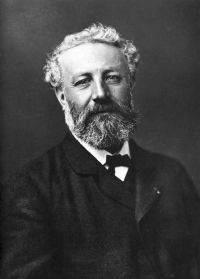
Åke Olson

Biographical details

Åke Olson How Eupalinos Navigated His Way Through The Mountain (2012)

Eupalinos was well aware of what level of accuracy he could obtain using the available tools and methodology and he designed the tunnels accordingly. The tunnel is not a miracle but exhibits very skilful craftsmanship. Encountering problems in the rock he was forced to deviate from his original plan. Doing this he incurred errors which he had to solve using the same tools and methodology. Eupalinos was not only a skilful constructor but although he made some measurement errors, he was also a master surveyor.
Source: Wikisource

Åke Olson How Eupalinos Navigated His Way Through The Mountain (2012)

Abstract: The Eupalinos tunnel is the most complex structure that has been preserved from the ancient world. The tunnel was cut from both ends, 1040 m through the Kastro mountain on Samos, around 550 to 540 BC and it has fascinated people ever since. But still more intriguing is how Eupalinos navigated, because the tunnel zigzags in a most challenging way. By estimating the accuracy obtained by Eupalinos from the geometry of the construction, the author reconstructs the methodology of the tunnelling.
Source: Wikisource

Åke Olson How Eupalinos Navigated His Way Through The Mountain (2012)

Even in modern surveying, errors are common; it is never a ›no-error‹ situation. The question is always how to detect them and control them; they are always there. Even modern engineers are quite discreet about their mistakes.
The angles of the traverse forming the equal-legged triangle, Eupalinos theoretical goal, turn out as follows: 15 + 7.5 + 315 (45) + 22.5 (=360) degrees which bring the traverse back on the same bearing. But the actual measured angles are: 16 degrees at A, 7 degrees at B, 46 degrees at C and 22 degrees at D which adds 1 degree to the deviation.
Source: Wikisource

Get perspective with Kwize: daily news enlightened by great literature