Summary

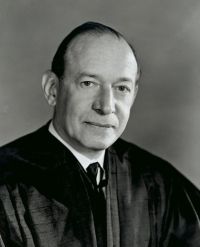
Portrait of Abe Fortas Abe Fortas Fortnightly Corporation v. United Artists Television…

The novelty of the use, incident to the novelty of the new technology, results in a baffling problem. Applying the normal jurisprudential tools-the words of the Act, legislative history, and precedent-to the facts of the case is like trying to repair a television set with a mallet. And no aid may be derived from the recent attempts of Congress to formulate special copyright rules for CATV-for Congress has vacillated in its approach.
Source: Wikisource

Portrait of Abe Fortas Abe Fortas Fortnightly Corporation v. United Artists Television…

The Court merely identifies two groups in the general field of television, one of which it believes may clearly be liable, and the other clearly not liable, for copyright infringement on a 'performance' theory: 'Broadcasters perform. Viewers do not perform.' From this premise, the Court goes on to hold that CATV 'falls on the viewer's side of the line. Essentially, a CATV system no more than enhances the viewer's capacity to receive the broadcaster's signals; it provides a well-located antenna with an efficient connection to the viewer's set.
Source: Wikisource

Portrait of Abe Fortas Abe Fortas Fortnightly Corporation v. United Artists Television…

Just as a CATV system performs (on the majority's analysis) the same function as the antenna of the individual viewer, so a television camera recording a live drama performs the same function as the eye of a spectator who is present in the theater. Both the CATV and the television camera 'receive programs that have been released to the public and carry them by private channels to additional viewers.' Ante, at 400.
Source: Wikisource

Get perspective with Kwize: daily news enlightened by great literature