Summary

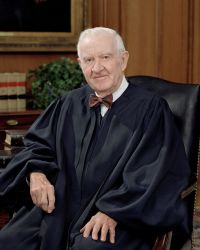
Portrait of John Paul Stevens John Paul Stevens Stewart v. Abend — Dissenting Opinion

Ironically, by restricting the author's ability to consent to creation of a derivative work with independent existence, the Court may make it practically impossible for the original author to sell his derivative rights late in the original term and to reap the financial and artistic advantage that comes with the creation of a derivative work.
Source: Wikisource

Portrait of John Paul Stevens John Paul Stevens Stewart v. Abend — Dissenting Opinion

In addition, when an author intends that his work be used as part of a joint work, the copyright law gives the joint author common authority to exploit the underlying work and renew the copyright. [20] The Court today holds, however, that the independent entrepreneur, who does not go into the company's employ and who intends to make independent use of his work, does not also have the same right to sell his consent to produce a derivative work that can be distributed and publicly performed during the full term of its copyright protection.
Source: Wikisource

Portrait of John Paul Stevens John Paul Stevens Stewart v. Abend — Dissenting Opinion

The legislative history confirms that the copyright in derivative works not only gives the second creative product the monopoly privileges of excluding others from the unconsented use of the new work, but also allows the creator to publish his or her own work product. The authority to produce the derivative work, which includes creative contributions by both the original author and the second artist, is dependent upon the consent of the proprietor of the underlying copyright.
Source: Wikisource

Get perspective with Kwize: daily news enlightened by great literature