Summary

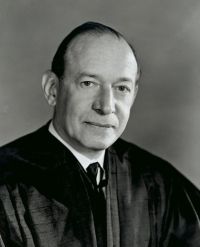
Portrait of Abe Fortas Abe Fortas Foster v. California — Opinion of the Court

After Foster had been arrested, David was called to the police station to view a lineup. There were three men in the lineup. One was petitioner. He is a tall man-close to six feet in height. The other two men were short-five feet, five or six inches. Petitioner wore a leather jacket which David said was similar to the one he had seen underneath the coveralls worn by the robber. After seeing this lineup, David could not positively identify petitioner as the robber. He 'thought' he was the man, but he was not sure.
Source: Wikisource

Portrait of Abe Fortas Abe Fortas Foster v. California — Opinion of the Court

A week or 10 days later, the police arranged for David to view a second lineup. There were five men in that lineup. Petitioner was the only person in the second lineup who had appeared in the first lineup. This time David was 'convinced' petitioner was the man.
At trial, David testified to his identification of petitioner in the lineups, as summarized above. He also repeated his identification of petitioner in the courtroom. The only other evidence against petitioner which concerned the particular robbery with which he was charged was the testimony of the alleged accomplice Clay.
Source: Wikisource

Portrait of Abe Fortas Abe Fortas Foster v. California — Opinion of the Court

This procedure so undermined the reliability of the eyewitness identification as to violate due process.
In a decision handed down since the Supreme Court of California declined to consider petitioner's case, it reversed a conviction because of the unfair makeup of a lineup. In that case, the California court said: ' (W) e do no more than recognize * * * that unfairly constituted lineups have in the past too often brought about the conviction of the innocent.' People v.
Source: Wikisource

Get perspective with Kwize: daily news enlightened by great literature