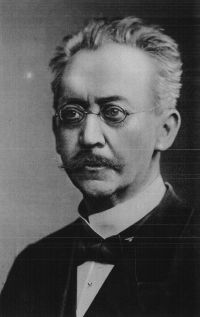
Adolf von Harnack

Adolf von Harnack

Summary

Portrait of Adolf von Harnack Adolf von Harnack History of Dogma, Volume 2

The prophets and Christ are therefore a source of righteousness in so far as they are teachers. But as God, that is, the divine Word (which we need not here discuss) has spoken in them, Christianity is to be defined as the Knowledge of God, mediated by the Deity himself, and as a virtuous walk in the longing after eternal and perfect life with God, as well as in the sure hope of this imperishable reward. By knowing what is true and doing what is good man becomes righteous and a partaker of the highest bliss.
Source: Gutenberg

Portrait of Adolf von Harnack Adolf von Harnack History of Dogma, Volume 2

This conception appears to fall short of the Christian ideal and perhaps really does so; but as soon as we measure it not by the Gospel but by the aims of Greek philosophy, we see very clearly the progress that has been attained through this same Gospel. What Origen has in his eye is mankind, and he is anxious for the amendment not merely of a few, but of all. The actual state of things in the Church no longer allowed him to repeat the exclamations of the Apologists that all Christians were philosophers and that all were filled with the same wisdom and virtue.
Source: Gutenberg

Portrait of Adolf von Harnack Adolf von Harnack History of Dogma, Volume 2

If we read the great work περι αρχων, or the treatise against Celsus, or the commentaries connectedly, we never cease to wonder how a mind so clear, so sure of the ultimate aim of all knowledge, and occupying such a high standpoint, has admitted in details all possible views down to the most naive myths, and how he on the one hand believes in holy magic, sacramental vehicles and the like, and on the other, in spite of all his rational and even empirical views, betrays no doubt of his abstract creations. But the problem that confronts us in Origen is that presented by his age.
Source: Gutenberg

Get perspective with Kwize: daily news enlightened by great literature