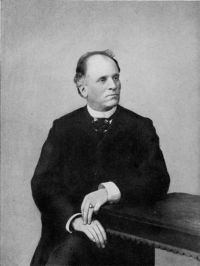
Adolph Francis Alphonse Bandelier

Adolph Francis Alphonse Bandelier

Summary

Portrait of Adolph Francis Alphonse Bandelier Adolph Francis Alphonse Bandelier Catholic Encyclopedia (1913) — Afonzo de Albuquerque (1913)

In pursuance of his policy to prevent other nations from intercourse with India, he occupied a strong position at Aden, on the Red Sea, March, 1513, but about the same time the Turks had conquered Egypt and effectively barred access to the far East to all other nations except by sea. While Albuquerque was thus establishing Portugues colonization in India on a firm footing, and planning advances beyond Eastern Asia, the Crown of Portugal was listening to intrigues to his prejudice.
Source: Wikisource

Portrait of Adolph Francis Alphonse Bandelier Adolph Francis Alphonse Bandelier Catholic Encyclopedia (1913) — Afonzo de Albuquerque (1913)

He was second son of Gonzallo de Albuquerque, lord of Villaverde, and became attached to the person of the king of Portugal. He went to Otranto with Alphonso V in 1480, and made his first voyage to the far East in 1503, returning to Lisbon 1504. When Tristan de Cunha sailed for India in 1506, Albuquerque was one of his officers. He formed the plan to monopolize trade with East India for Portugal, by excluding from it both the Venetians and the Saracens, and therefore sought to make himself master of the Red Sea.
Source: Wikisource

Portrait of Adolph Francis Alphonse Bandelier Adolph Francis Alphonse Bandelier Catholic Encyclopedia (1913) — Afonzo de Albuquerque (1913)

His enemies opposed him at sea, as well as on land, and they might, at any time, obtain succour from powerful Mohammedan states interlying between Europe and Asia. His only route for communication and relief was around the Cape of Good Hope. When, during the last five years of his life, he could at last turn to organization and administration, he proved himself a great man in this respect also.
Source: Wikisource

Get perspective with Kwize: daily news enlightened by great literature