Summary

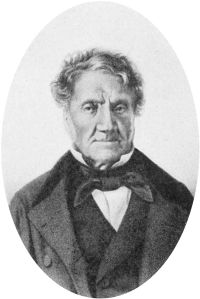
Portrait of Aimé Bonpland Aimé Bonpland Personal Narrative of Travels to the Equinoctial Regions of America…

Here, as in every place where the population is concentrated, vegetation diminishes. Those palm-trees round the Havannah and in the amphitheatre of Regla on which I delighted to gaze are disappearing by degrees. The marshy places which I saw covered with bamboos are cultivated and drained. Civilization advances; and the soil, gradually stripped of plants, scarcely offers any trace of its wild abundance. From the Punta to San Lazaro, from Cabana to Regla and from Regla to Atares the road is covered with houses, and those that surround the bay are of light and elegant construction.
Source: Gutenberg

Portrait of Aimé Bonpland Aimé Bonpland Personal Narrative of Travels to the Equinoctial Regions of America…

I call the country of the Anglo-Americans the United States, without adding of North America, although other United States exist in South America. It is embarrassing to speak of nations who play a great part on the scene of the world without having collective names. The term American can no longer be applied solely to the citizens of the United States of North America; and it were to be wished that the nomenclature of the independent nations of the New Continent should be fixed in a manner at once convenient, harmonious, and precise.
Source: Gutenberg

Portrait of Aimé Bonpland Aimé Bonpland Personal Narrative of Travels to the Equinoctial Regions of America…

If civilization, instead of extending, were to change its place; if, after great and deplorable convulsions in Europe, America, between Cape Hatteras and the Missouri, were to become the principal seat of the light of Christianity, what a spectacle would be presented by that centre of civilization, where, in the sanctuary of liberty, we could attend a sale of negroes after the death of a master, and hear the sobbings of parents who are separated from their children!
Source: Gutenberg

Get perspective with Kwize: daily news enlightened by great literature