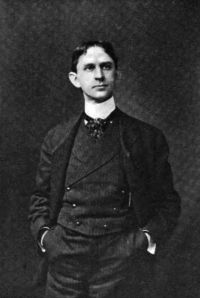
Albert Bigelow Paine

Albert Bigelow Paine

Summary

Portrait of Albert Bigelow Paine Albert Bigelow Paine The Boys' Life of Mark Twain — Chapter 5 (1916)

Then, suddenly, they could hardly believe their eyes; a little way above the road the boulder struck a projection, made one mighty leap into the air, sailed clear over the negro and his mule, and landed in the soft dirt beyond the road, only a fragment striking the shop, damaging, but not wrecking it. Half buried in the ground, the great stone lay there for nearly forty years; then it was broken up. It was the last rock the boys ever rolled down. Nearly sixty years later John Briggs and Mark Twain walked across Holliday's Hill and looked down toward the river road.
Source: Wikisource

Portrait of Albert Bigelow Paine Albert Bigelow Paine The Boys' Life of Mark Twain — Chapter 5 (1916)

The chief ambition—the "permanent ambition"—of every Hannibal boy was to be a pilot. The pilot in his splendid glass perch with his supreme power and princely salary was to them the noblest of all human creatures. An elder Bowen boy was already a pilot, and when he came home, as he did now and then, his person seemed almost too sacred to touch.
Source: Wikisource

Portrait of Albert Bigelow Paine Albert Bigelow Paine The Boys' Life of Mark Twain — Chapter 5 (1916)

Tom Blankenship (Huck) one morning said he had dreamed just where the treasure was, and that if the boys—Sam Clemens and John Briggs—would go with him and help dig, he would divide. The boys had great faith in dreams, especially in Huck's dreams. They followed him to a place with some shovels and picks, and he showed them just where to dig. Then he sat down under the shade of a pawpaw-bush and gave orders.
They dug nearly all day. Huck didn't dig any himself, because he had done the dreaming, which was his share.
Source: Wikisource

Get perspective with Kwize: daily news enlightened by great literature