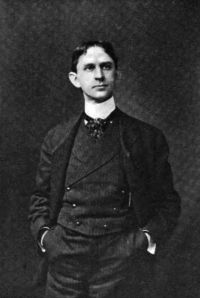
Albert Bigelow Paine

Albert Bigelow Paine

Summary

Portrait of Albert Bigelow Paine Albert Bigelow Paine The Boys' Life of Mark Twain — Chapter 4 (1916)

Sam's days were not all disturbed by fierce events. They were mostly filled with pleasanter things. There were picnics sometimes, and ferry-boat excursions, and any day one could roam the woods, or fish, alone or in company. The hills and woods around Hannibal were never disappointing. There was the cave with its marvels. There was Bear Creek, where he had learned to swim. He had seen two playmates drown; twice, himself, he had been dragged ashore, more dead than alive; once by a slave girl, another time by a slave man—Neal Champ, of the Pavey Hotel.
Source: Wikisource

Portrait of Albert Bigelow Paine Albert Bigelow Paine The Boys' Life of Mark Twain — Chapter 4 (1916)

Sometimes the little boy followed the hunters all night long, and returned with them through the sparkling and fragrant morning, fresh, hungry, and triumphant, just in time for breakfast. So it is no wonder that Little Sam, at nine, was no longer Little Sam, but plain Sam Clemens, and grown up. If there were doubtful spots in his education—matters related to smoking and strong words—it is also no wonder, and experience even in these lines was worth something in a book like Tom Sawyer.
Source: Wikisource

Portrait of Albert Bigelow Paine Albert Bigelow Paine The Boys' Life of Mark Twain — Chapter 4 (1916)

Sam was more like his mother than the others. His brother, Henry Clemens, three years younger, was as unlike Sam as possible. He did not have the "long talk," and was a handsome, obedient little fellow whom the mischievous Sam loved to tease. Henry was to become the Sid of Tom Sawyer, though he was in every way a finer character than Sid. With the death of little Benjamin, Sam and Henry had been drawn much closer together, and, in spite of Sam's pranks, loved each other dearly. For the pranks were only occasional, and Sam's love for Henry was constant. He fought for him oftener than with him.
Source: Wikisource

Get perspective with Kwize: daily news enlightened by great literature