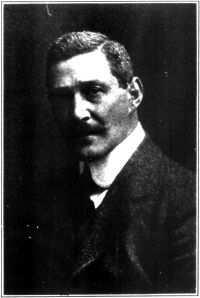
Albert Kinross

Albert Kinross

Traitors (1902)

Summary

Portrait of Albert Kinross Albert Kinross,  Traitors (1902)

“ She had written to Victor Molineux, inviting him for tea. She had not met him at the cemetery. So far she had not been out there.
He found her altered and strangely beautiful, the sun still upon her face; and she was no longer in black, nor with any sign of mourning. It was one of those first radiant days of spring when one could wear soft colors. He looked round the room for his ever-watchful enemy; but the portraits were gone. Only one remained, inconspicuous on a side-table. He need not look at it. The man with the thin hair and eye-glasses could follow him no longer.
”
Source: Wikisource

Portrait of Albert Kinross Albert Kinross,  Traitors (1902)

“ These were the first of many solemn visits, during which they sat and talked of their misfortunes, surrounded by portraits of the man and woman whose early going had brought them into each others lives.
Molineux, looking round him in her little drawing-room, and, whichever way he turned, meeting that set face with its thin hair and eye-glasses, began positively to dislike it. And she, spied on constantly by that cold woman with the disdainful yet serene countenance, felt often like turning those portraits to the wall, or she wished that he would remove them.
”
Source: Wikisource

Portrait of Albert Kinross Albert Kinross,  Traitors (1902)

“ On such days Constance avoided the cemetery. She would go as far as the gate, look in, and if there were too many people, she would turn away. She went as she had come; across the cinder-path, then on to the road, and next downhill as far as the tramway station. She would ride back to her lonely villa, unconsoled and unconsolable. Perhaps the next day she would try again.
Most often the cemetery was empty, save for the gardeners and men who worked there. They did not count. Like the monuments and funeral shrubs, they belonged to the place
”
Source: Wikisource

Get perspective with Kwize: daily news enlightened by great literature