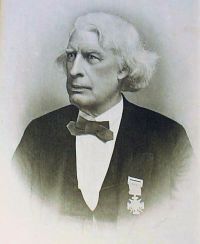
Albert Mackey

Albert Mackey

Summary

Portrait of Albert Mackey Albert Mackey The Principles of Masonic Law… (1856 | portal)

Every Mason, who has been tried and convicted by a lodge, has an inalienable right to appeal from that conviction, and from the sentence accompanying it, to the Grand Lodge.
As an appeal always supposes the necessity of a review of the whole case, the lodge is bound to furnish the Grand Lodge with an attested copy of its proceedings on the trial, and such other testimony in its possession as the appellant may deem necessary for his defense.
Source: Wikisource

Portrait of Albert Mackey Albert Mackey The Principles of Masonic Law… (1856 | portal)

The Grand Lodge may, however, only approve in part, and may reduce the penalty inflicted, as for instance, from expulsion to suspension. In this case, the original sentence of the lodge becomes void, and the milder sentence of the Grand Lodge is to be put in force. The same process would take place, were the Grand Lodge to increase instead of diminishing the amount of punishment, as from suspension to expulsion. For it is competent for the Grand Lodge, on an appeal, to augment, reduce or wholly abrogate the penalty inflicted by its subordinate.
Source: Wikisource

Portrait of Albert Mackey Albert Mackey The Principles of Masonic Law… (1856 | portal)

But, as this action is often highly important in its results, and places the appellant and the lodge in an entirely different relative position, I have deemed its consideration worthy of a distinct chapter.
During the pendency of an appeal, the sentence of the subordinate lodge is held in abeyance, and cannot; be enforced.
Source: Wikisource

Get perspective with Kwize: daily news enlightened by great literature