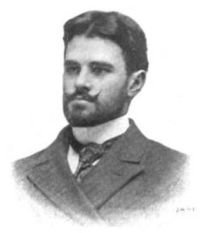
Albert Payson Terhune

Albert Payson Terhune

Summary

Portrait of Albert Payson Terhune Albert Payson Terhune The Popular Magazine, Volume 31… (1914)

It shook the cage like a miniature earthquake. But it did not shake loose the hold of Cephas.
Dearly, no doubt, would the pig have loved to exhaust in a battle squeal such little breath as the blow against the roof had left him. But, to squeal, a pig must open wide his jaws. And Cephas' long, narrow jaws were otherwise engaged. So, in his hour of mortal stress, this one beloved expression of emotion was denied. He must fight without the inspiring thrill of music.
The python dashed himself against the painted walls and the floor, striving in growing panic to shake free and to strike.
Source: Wikisource

Portrait of Albert Payson Terhune Albert Payson Terhune The Popular Magazine, Volume 31… (1914)

And on the sidewalk beside Byram, every week day, from noon to midnight, stood, or sprawled, or trotted Cephas; ever and anon lifting to high heaven a squeal or a succession of squeals that tore the busily humming summer air into shreds.
Never did Cephas squeal without drawing as much attention as did all the Street's human barkers combined. City folk would jump in amaze and turn to see whence emanated the fearsome sound. Memories awoke in most passers-by, and curiosity in all. And the Trip to Mars speedily became the best-advertised show at the exposition.
Source: Wikisource

Portrait of Albert Payson Terhune Albert Payson Terhune The Popular Magazine, Volume 31… (1914)

Byram, exiled for the season from his beloved farm in order to make ten times as much money at the exposition, was acting as his own ballyhoo man to draw trade to the Trip to Mars. And on the third day of the season his raucous cries of “Greatest, most reefined, most side-splitting show of the century,” were suddenly punctuated by a squeal that split the looser volume of his clamor as a sword blade might cleave past-worthy melon.
Source: Wikisource

Get perspective with Kwize: daily news enlightened by great literature