Summary

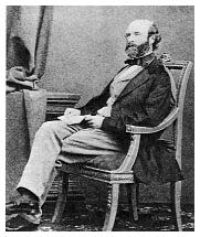
Portrait of Alexander Henry Haliday Alexander Henry Haliday Notes and papers relating to Dublin University Zoological Association

Jussieu's plan of an uniform termination, as distinctive of the natural families, had been applied to the animal kingdom by Leach, deriving the family names from the typical genus, in the form of the patronymic in idae. The modern families are in great part equivalent to the genera of Linnaeus, or of Fabricius, in entomology, and thus may rank among the most marked groups in the systematic scale.
Source: Wikisource

Portrait of Alexander Henry Haliday Alexander Henry Haliday Notes and papers relating to Dublin University Zoological Association

These bodies are usually attached to the under side, between the head and prothorax of the insect, if of moderate size, as the species of Evacanthus, one of which, the craticula of Curtis, common among rushes, is particularly infested by them. To smaller insects, as Typhlocyba, Delphax, &c., they are commonly affixed between the segments of the abdomen, under the elytra and wings in winged individuals.
Source: Wikisource

Portrait of Alexander Henry Haliday Alexander Henry Haliday Notes and papers relating to Dublin University Zoological Association

Fr. 280, 24. The Heterocerus, given as femoralis in the list of Dublin Coleoptera (Nat. Hist. Rev., vol. i., p. 34) , was shown. Kiesenwetter has described it as a new species, H. arenosus; but with doubt expressed, having only two specimens before him. Aphodius lapponum, first recorded as British in 1847, by Mr. Hardy, as A. subalpinus, had been long before known to us, by its proper name, as a native of Ireland, which occurred on the hills both of Antrim and Wicklow.
Source: Wikisource

Get perspective with Kwize: daily news enlightened by great literature