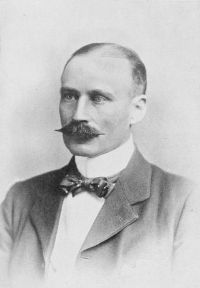
Alfred St Hill Gibbons

Alfred St Hill Gibbons

Summary

Portrait of Alfred St Hill Gibbons Alfred St Hill Gibbons 1911 Encyclopædia Britannica, Volume 3… (1911)

Slaves might own slaves who in their turn might own slaves, the highest grade always being directly responsible to some Barotse chief. As a reward of gallantry or ability the paramount chief occasionally conferred chief’s rank on individuals not of Barotse birth, and these ipso facto assumed the name and privileges of the Barotse.
Source: Wikisource

Portrait of Alfred St Hill Gibbons Alfred St Hill Gibbons 1911 Encyclopædia Britannica, Volume 3… (1911)

Very black, tall in stature, deep in chest and comparatively speaking refined in feature, a Barotse is readily distinguishable amidst a mixed group of natives. Being numerically small they form an oligarchy in which, with few exceptions, each man holds rank in a chieftainship of which there are three grades. Next to the chiefs rank their descendants who have not themselves acquired chief’s rank and hold an intermediate position as freeborn
Source: Wikisource

Portrait of Alfred St Hill Gibbons Alfred St Hill Gibbons 1911 Encyclopædia Britannica, Volume 3… (1911)

By right, an accused chief is tried by his peers, each of whom in rotation from junior to senior gives his verdict, after which the president reports the finding of the court to the paramount chief, who passes sentence. As to their religious beliefs the Barotse imagine the sun to be the embodiment of a great god whose sole care is for the amelioration of man. Him they worship, though more pains are taken to appease evil spirits, in whose existence they also believe, to whom every evil to which man is heir is attributed.
Source: Wikisource

Get perspective with Kwize: daily news enlightened by great literature