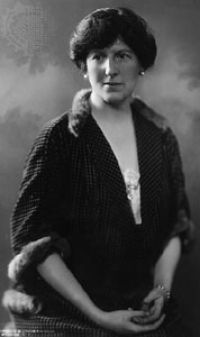
Alice Duer Miller

Alice Duer Miller

Summary

Portrait of Alice Duer Miller Alice Duer Miller Instruments of Darkness (collection… (1926)

To kill some one as gentle and good as an angel—to tell her you would never see her or speak to her again, when you knew perfectly well... They called it pneumonia, but I know she just didn't want to live. If we'd gone off together, John, it wouldn't have killed Beatrice. Beatrice would have made a new life for herself. She doesn't need me. That's what tortures me so—that I sacrificed Lorna needlessly.
Source: Wikisource

Portrait of Alice Duer Miller Alice Duer Miller Instruments of Darkness (collection… (1926)

And he went on to argue, with great justice and clarity, for a moral code as against the individual desires.
But Raymond, like most people in distress, did not want to be enlightened; he wanted only to unload the terrible weight of sorrow upon his heart—to tell John—to tell any one, but John happened to be there—all about Lorna's tenderness and consideration for him; of her generosity toward his established ties; of the way she depended on him, and most surprising, the way that dependence made him strong and almost efficient.
Source: Wikisource

Portrait of Alice Duer Miller Alice Duer Miller Instruments of Darkness (collection… (1926)

In Beatrice's poverty her friends regretted not the lack of luxury—clever, healthy young people ought not to mind that—but the lack of scope. Of freedom to move about the world, of time to work for great objects, of chances to meet great people. If Barham had made Raymond his representative, Beatrice would have profited more in a way than Raymond—all these things would have come to her. All these things John believed she had given up rather than accept them at the hands of a lover.
But he did not attempt to tell all this to Aunt Lucy, who would not have believed it anyhow.
Source: Wikisource

Get perspective with Kwize: daily news enlightened by great literature