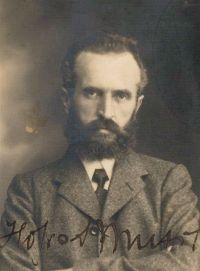
 Alois Musil,
The Northern Ḥeǧâz
(1926)
Alois Musil,
The Northern Ḥeǧâz
(1926)
“ To the west of the spring the chief Ḥarb eben ʻAṭijje had fenced off a part of the ground with a wall of unburnt brick and had established a new garden, in which he had planted date palms, pomegranates, and a few fig trees, and his gardener cultivated vegetables there. But the artificial wall of this garden aroused the wrath of the wind, which deposited sand against it; the drift increased in size, surmounted the wall, and the sand was scattered into the garden. The gardens of Tebûk form the shape of a horseshoe open towards the northeast, and they enfold the stronghold and the settlement. ”
