Summary

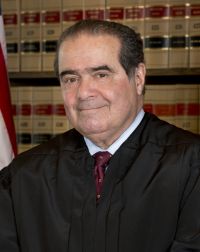
Portrait of Antonin Scalia Antonin Scalia Allen v. Lawhorn — Dissent

An application for a writ of habeas corpus on behalf of a person in custody pursuant to the judgment of a State court shall not be granted with respect to any claim that was adjudicated on the merits in State court proceedings unless the adjudication of the claim...resulted in a decision that was contrary to, or involved an unreasonable application of, clearly established Federal law, as determined by the Supreme Court of the United States.
Source: Wikisource

Portrait of Antonin Scalia Antonin Scalia Allen v. Lawhorn — Dissent

Counsel's closing statement is rhetorical argument, not evidence. Reconstructing what that argument might have been, and how the jury might have reacted to it—a jury that had already heard opening argument and a procession of mitigation witnesses—is an exercise in guesswork. The Eleventh Circuit's reasons for finding prejudice are unpersuasive.
The Eleventh Circuit observed that one juror had voted to recommend life; and because a vote of 10 to 2 was required to recommend a death sentence, counsel "needed only to convince two other jurors to alter the outcome of the proceedings."
Source: Wikisource

Get perspective with Kwize: daily news enlightened by great literature