Summary

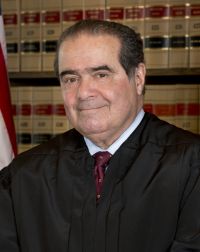
Portrait of Antonin Scalia Antonin Scalia Lankford v. Idaho — Dissenting Opinion

Because Lankford has not established that his counsel had any basis reasonably to believe that the death penalty was, either legally or as a practical matter, out of the case—and indeed he has not even established that his counsel unreasonably believed that to be so—we have no cause to reverse the judgment of the Supreme Court of Idaho. In doing so, we seemingly adopt the topsy-turvy principle that the capital defendant cannot be presumed to know the law, but must be presumed to have detrimentally relied upon a misunderstanding of the law or a misinterpretation of the judge.
Source: Wikisource

Portrait of Antonin Scalia Antonin Scalia Lankford v. Idaho — Dissenting Opinion

The only evidence supporting detrimental (albeit unreasonable) reliance is the fact that counsel's presentation at the sentencing hearing did not specifically address the death penalty. That is not terribly persuasive evidence, since all the arguments made against a life sentence or a minimum term of more than 10 years would apply a fortiori against a sentence of death.
Source: Wikisource

Portrait of Antonin Scalia Antonin Scalia Lankford v. Idaho — Dissenting Opinion

The Court holds that Lankford's due process rights were violated because he did not receive adequate notice that his sentencing hearing could result in the death penalty. I disagree.
Lankford knew that he had been convicted of first-degree murder, and Idaho Code § 18-4004 (1987) clearly states that "every person guilty of murder of the first degree shall be punished by death or by imprisonment for life."
Source: Wikisource

Get perspective with Kwize: daily news enlightened by great literature