Summary

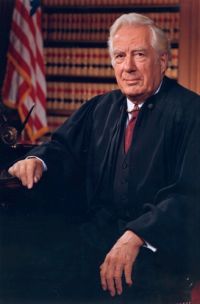
Portrait of Warren E. Burger Warren E. Burger Santobello v. New York — Opinion of the Court

The disposition of criminal charges by agreement between the prosecutor and the accused, sometimes loosely called 'plea bargaining,' is an essential component of the administration of justice. Properly administered, it is to be encouraged. If every criminal charge were subjected to a full-scale trial, the States and the Federal Government would need to multiply by many times the number of judges and court facilities.
Source: Wikisource

Portrait of Warren E. Burger Warren E. Burger Santobello v. New York — Opinion of the Court

Fed.Rule Crim.Proc. 11, governing pleas in federal courts, now makes clear that the sentencing judge must develop, on the record, the factual basis for the plea, as, for example, by having the accused describe the conduct that gave rise to the charge. [1] The plea must, of course, be voluntary and knowing and if it was induced by promises, the essence of those promises must in some way be made known. There is, of course, no absolute right to have a guilty plea accepted.
Source: Wikisource

Portrait of Warren E. Burger Warren E. Burger Santobello v. New York — Opinion of the Court

On this record, petitioner 'bargained' and negotiated for a particular plea in order to secure dismissal of more serious charges, but also on condition that no sentence recommendation would be made by the prosecutor. It is now conceded that the promise to abstain from a recommendation was made, and at this stage the prosecution is not in a good position to argue that its inadvertent breach of agreement is immaterial. The staff lawyers in a prosecutor's office have the burden of 'letting the left hand know what the right hand is doing' or has done.
Source: Wikisource

Get perspective with Kwize: daily news enlightened by great literature