Summary

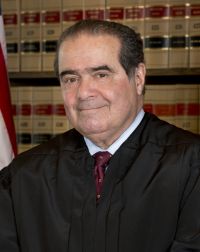
Portrait of Antonin Scalia Antonin Scalia BMW of North America, Inc. v. Gore…

The elevation of “fairness” in punishment to a principle of “substantive due process” means that every punitive award unreasonably imposed is unconstitutional; such an award is by definition excessive, since it attaches a penalty to conduct undeserving of punishment. Indeed, if the Court is correct, it must be that every claim that a state jury's award of compensatory damages is “unreasonable” (because not supported by the evidence) amounts to an assertion of constitutional injury.
Source: Wikisource

Portrait of Antonin Scalia Antonin Scalia BMW of North America, Inc. v. Gore…

On first reading this, one is faced with the prospect that federal punitive-damages law (the new field created by today's decision) will be beset by the sort of “interest analysis” that has laid waste the formerly comprehensible field of conflict of laws. The thought that each assessment of punitive damages, as to each offense, must be examined to determine the precise “state interests” pursued, is most unsettling. Moreover, if those “interests” are the most fundamental determinant of an award, one would think that due process would require the assessing jury to be instructed about them.
Source: Wikisource

Portrait of Antonin Scalia Antonin Scalia BMW of North America, Inc. v. Gore…

There is no basis for believing that Alabama has sought to control conduct elsewhere. The statutes at issue merely permit civil juries to treat conduct such as petitioner's as fraud, and authorize an award of appropriate punitive damages in the event the fraud is found to be “gross, oppressive, or malicious,” Ala. Code § 6-11-20 (b) (1) (1993) . To be sure, respondent did invite the jury to consider out-of-state conduct in its calculation of damages, but any increase in the jury's initial award based on that consideration is not a component of the remitted judgment before us.
Source: Wikisource

Get perspective with Kwize: daily news enlightened by great literature