Summary

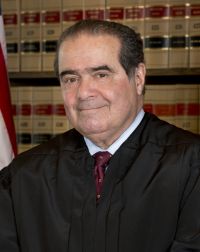
Portrait of Antonin Scalia Antonin Scalia Payne v. Tennessee — Concurring Opinion

It seems to me difficult for those who were in the majority in Booth to hold themselves forth as ardent apostles of stare decisis. That doctrine, to the extent it rests upon anything more than administrative convenience, is merely the application to judicial precedents of a more general principle that the settled practices and expectations of a democratic society should generally not be disturbed by the courts. It is hard to have a genuine regard for stare decisis without honoring that more general principle as well.
Source: Wikisource

Portrait of Antonin Scalia Antonin Scalia Payne v. Tennessee — Concurring Opinion

Justice MARSHALL has also explained that " ' [t] he jurist concerned with public confidence in, and acceptance of the judicial system might well consider that, however admirable its resolute adherence to the law as it was, a decision contrary to the public sense of justice as it is, operates, so far as it is known, to diminish respect for the courts and for law itself.' " Flood v.
Source: Wikisource

Portrait of Antonin Scalia Antonin Scalia Payne v. Tennessee — Concurring Opinion

Kuhn, 407 U.S. 258, 293, n. 4, 92 S.Ct. 2099, 2117, n. 4, 32 L.Ed.2d 728 (1972) (dissenting opinion) (quoting Szanton, Stare Decisis; A Dissenting View, 10 Hastings L.J. 394, 397 (1959) ) (internal quotations omitted) . Booth's stunning ipse dixit, that a crime's unanticipated consequences must be deemed "irrelevant" to the sentence, 482 U.S., at 503, 107 S.Ct., at 2533, conflicts with a public sense of justice keen enough that it has found voice in a nationwide "victim's rights" movement.
Source: Wikisource

Get perspective with Kwize: daily news enlightened by great literature