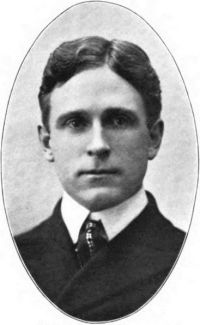
Archer Butler Hulbert

Archer Butler Hulbert

Summary

Portrait of Archer Butler Hulbert Archer Butler Hulbert Pioneer Roads and Experiences of Travelers… (1902-05)

How many an anxious wagoner has pushed his horses to the bitter edge of exhaustion to gain his destination ere a freeze would stall him as completely as if his wagon-bed lay on the surface of a "quicksand pit." A heavy load could not be sent over a frozen pioneer road without wrecking the vehicle. Yet in some parts the freight traffic had to go on in the winter, as the hauling of cotton to market in the southern states. Such was the frightful condition of the old roads that four and five yoke of oxen conveyed only a ton of cotton so slowly that motion was almost imperceptible
Source: Wikisource

Portrait of Archer Butler Hulbert Archer Butler Hulbert Pioneer Roads and Experiences of Travelers… (1902-05)

But Braddock's Road was, in its day, a huge, broad track, twelve feet wide; and the Cumberland Road exceeded it in breadth nearly fifty feet. So our study may be pursued from the interesting standpoint of a widening vista; the belt of blue above our heads grows broader as we study the widening of the trail of the Indian.
To one who has not followed the trails of the West or the Northland, the experience is always delightful. It is much the same delight as that felt in traversing a winding woodland road, intensified many fold.
Source: Wikisource

Portrait of Archer Butler Hulbert Archer Butler Hulbert Pioneer Roads and Experiences of Travelers… (1902-05)

The ever-recurring road-working days and their cheerful observance, with time's work in rotting and fire's work in removing dead tree and stump, at last let in long lines of sunshine to dry up the mud, to burn up the miasma, and to bless the wayfarer to other parts, as well as to disclose what these pioneer road-makers had done for themselves by opening up fields in the forests. . . To perfect easily and naturally these industries requires three generations. The forests must be felled, logs rolled and burned, families reared, and in most cases the land to be paid for.
Source: Wikisource

Get perspective with Kwize: daily news enlightened by great literature