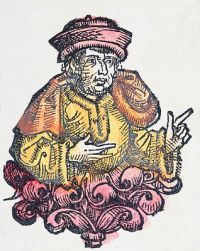
 Arnobius,
Ante-Nicene Fathers Vol. VI, Adversus Gentes…
(1885)
Arnobius,
Ante-Nicene Fathers Vol. VI, Adversus Gentes…
(1885)
“ But why do I laugh at the sickles and tridents which have been given to the gods? why at the horns, hammers, and caps, when I know that certain images have [1] the forms of certain men, and the features of notorious courtesans? For who is there that does not know that the Athenians formed the Hermæ in the likeness of Alcibiades? Who does not know—if he read Posidippus over again—that Praxiteles, putting forth his utmost skill, [2] fashioned the face of the Cnidian Venus on the model of the courtesan Gratina, whom the unhappy man loved desperately? ”
