Summary

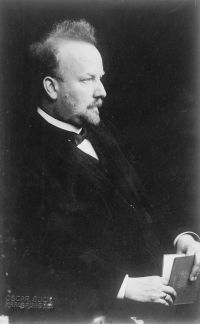
Portrait of Arthur Drews Arthur Drews The Witnesses to the Historicity of Jesus… (1912)

How I shall admire, how I shall laugh and be delighted, when I hear so many proud Caesars, whom men had turned into gods, whining in the deepest abyss of darkness; so many magistrates, who persecuted the name of the Lord, melting in a more furious fire than any they had lit for the Christians; so many wise philosophers, who taught their pupils that God cared about nothing, burning in the glowing flames
Source: Wikisource

Portrait of Arthur Drews Arthur Drews The Witnesses to the Historicity of Jesus… (1912)

The Question of the Genuineness of “Annals,” xv, 44.—It is, however, not superfluous, perhaps, to consider more closely what is regarded as the most important profane witness for the historicity of Jesus—that of Tacitus. Such witnesses still seem to make a great impression on the general public. Even theologians who are themselves convinced of the worthlessness of such witnesses as regards the problem we are considering do not fail, as a rule, to repeat them to “the people” as if they gave some confirmation of their belief in an historical Jesus.
Source: Wikisource

Portrait of Arthur Drews Arthur Drews The Witnesses to the Historicity of Jesus… (1912)

But how could the legend arise that Nero was the first to persecute the Christians? It arose, says Hochart, under a threefold influence. The first is the apocalyptic idea, which saw in Nero the Antichrist, the embodiment of all evil, the terrible adversary of the Messiah and his followers. As such he was bound, by a kind of natural enmity, to have been the first to persecute the Christians; as Sulpicius puts it, “because vice is always the enemy of the good.”
Source: Wikisource

Get perspective with Kwize: daily news enlightened by great literature