Summary

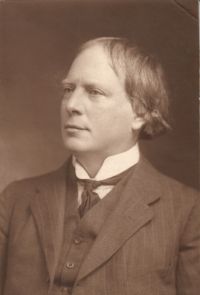
Portrait of Arthur Machen Arthur Machen The White People (Machen) — Prologue (1904)

But sin is an effort to gain the ecstasy and the knowledge that pertain alone to angels and in making this effort man becomes a demon. I told you that the mere murderer is not therefore a sinner; that is true, but the sinner is sometimes a murderer. Gilles de Raiz is an instance. So you see that while the good and the evil are unnatural to man as he now is--to man the social, civilized being--evil is unnatural in a much deeper sense than good. The saint endeavours to recover a gift which he has lost; the sinner tries to obtain something which was never his.
Source: Wikisource

Portrait of Arthur Machen Arthur Machen The White People (Machen) — Prologue (1904)

We think that a man who does evil to us and to his neighbours must be very evil. So he is, from a social standpoint; but can't you realize that Evil in its essence is a lonely thing, a passion of the solitary, individual soul? Really, the average murderer, quâ murderer, is not by any means a sinner in the true sense of the word. He is simply a wild beast that we have to get rid of to save our own necks from his knife.
Source: Wikisource

Portrait of Arthur Machen Arthur Machen The White People (Machen) — Prologue (1904)

It is very disagreeable to have one's pocket picked, and we pronounce the thief to be a very great sinner. In truth, he is merely an undeveloped man. He cannot be a saint, of course; but he may be, and often is, an infinitely better creature than thousands who have never broken a single commandment. He is a great nuisance to us, I admit, and we very properly lock him up if we catch him; but between his troublesome and unsocial action and evil--Oh, the connexion is of the weakest.
Source: Wikisource

Get perspective with Kwize: daily news enlightened by great literature