Summary

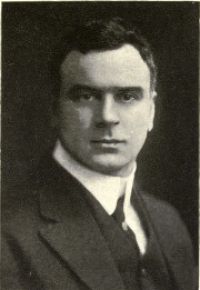
Portrait of Arthur Stringer Arthur Stringer The Man Who Couldn't Sleep — VII. The Panama Gold Chests (1919)

I did not realize, at that moment, that the signal was for me.
"Put her out," he whispered. And as I lifted my thumb from the contact point the room was again plunged into utter darkness. Yet through that darkness I could hear a distinct sound, a minute yet unmistakable noise of splintering wood, followed by an even louder sound, as though an auger were being withdrawn from a hole in the planking at my feet.
Then up from the floor on which Creegan knelt a thin ray of light flickered and wavered and disappeared.
Source: Wikisource

Portrait of Arthur Stringer Arthur Stringer The Man Who Couldn't Sleep — VII. The Panama Gold Chests (1919)

No one appeared before us. Nothing gave signs of being alive in that area of desolate ugliness which seemed like the back yard of all the world concentrated in a few huddled squares.
We were almost on West Street itself before I was conscious of the periodic sound of boat whistles complaining through the night. The air, I noticed, took on a fresher and cleaner smell. Creegan, without speaking, drew me in close to a wall-end, at the corner, and together we stood staring out toward the Hudson.
Source: Wikisource

Portrait of Arthur Stringer Arthur Stringer The Man Who Couldn't Sleep — VII. The Panama Gold Chests (1919)

At Tenth Avenue, he suddenly decided it was better for us to go on foot. So he threw away his stogie end, a little ruefully, and led me down a street as narrow and empty as a river bed. He led me into a part of New York that I had never before known. It was a district of bald brick walls, of rough flag and cobble-stone underfoot, of lonely street lamps, of shipping platforms and unbroken warehouse sides, of storage yards and milk depots, with railway tracks bisecting streets as empty as though they were the streets of a dead city.
Source: Wikisource

Get perspective with Kwize: daily news enlightened by great literature