Summary

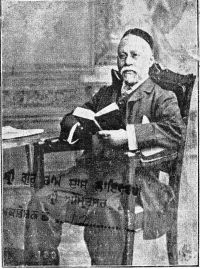
Portrait of Behramji Malabari Behramji Malabari Gujarát and the Gujarátis — Characters… (1882)

In all his habits of life simplicity, that is, a love of cheapness, is the leading trait. He loves his holidays, and during the Holi the Márwári abandons himself to full indulgence of the senses, but he takes care that the carousals do not cost him much in money. "Anything but money, unless it is for me"—that is the Márwári's motto. The Márwári makes a good friend so far as his advice goes. He marries late in life, and makes a loving husband and father, so far as love is love without money. He is too fond of hoarding to part with anything unless forced to.
Source: Wikisource

Portrait of Behramji Malabari Behramji Malabari Gujarát and the Gujarátis — Characters… (1882)

Thus lives the Márwári, buying and selling, lending and recovering, scheming, bullying, and going to court. His life is a continued struggle with his better part. But so successfully does he wrestle with himself, that before thirty he has ceased to be a human being. Before thirty he is a money-grubbing machine. He will do anything for money, get money from everything. He works greater havoc in the mofussil than in the Presidency towns. More minutes and reports have been written on the Márwári than on all the wild beasts and venemous reptiles put together. But the Márwári still flourishes.
Source: Wikisource

Portrait of Behramji Malabari Behramji Malabari Gujarát and the Gujarátis — Characters… (1882)

The Márwári never deals in anything which will not bring at least cent, per cent, profit. One might ask how he can have the courage, though his conscience is up to it, to ask double for such articles as oil, rice, fuel, &c. Well, it is thus:—The Márwári buys his articles of the poorest quality at the cheapest market. He buys when things go merely for the asking. He buys in the lump, and charges a heavy discount. He keeps shop in a locality from which the nearest market measures by the mile. He sells his goods on credit, and, of course, in retail.
Source: Wikisource

Get perspective with Kwize: daily news enlightened by great literature