Summary

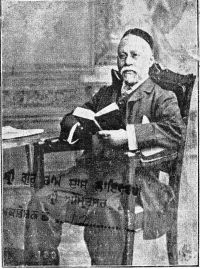
Portrait of Behramji Malabari Behramji Malabari Gujarát and the Gujarátis — Native Mendicants (1882)

Such is the Aghori. His look is that of a mad idiot. There are the insane leer, the protruding tongue, the filthy teeth. The Aghori never washes, never dresses. He takes only carrion or putrid food, and drinks foul water. In one hand he carries a human skull, in another some hideous instrument of torture and death. These are his insignia. To complete the picture of this horrible process of brutalisation, it is only to be added that the Aghori besmears himself with human ordure. He does not hold human life in the least account. Nothing is too sacred for him.
Source: Wikisource

Portrait of Behramji Malabari Behramji Malabari Gujarát and the Gujarátis — Native Mendicants (1882)

We now come to the Aghori mendicant. The Aghori, as his name implies, is an atrocity. It is a human being who, by a series of exercises, has achieved the highest pitch of his ambition—the feelings, habits, the very nature of a beast. The Aghori is insensible to all bodily discomforts; in fact, he courts them. He is a very rare animal, but by no means altogether extinct. One has only to see him to realise the loathsome object.
Source: Wikisource

Portrait of Behramji Malabari Behramji Malabari Gujarát and the Gujarátis — Native Mendicants (1882)

No one in these days can indulge the luxury of giving away a few thousand rupees, however earned, without being overtaken for his folly by the inevitable Khan Báhádurship or some such "mark of His Excellency's favour."
The grand old doctrine of THINKING WELL, SPEAKING WELL, AND ACTING well—the triple badge of Oriental charity, is becoming forgotten day by day, and in its stead we have a grosser, an unreal substitute, the giving to others that which may not be of particular use to oneself.
Source: Wikisource

Get perspective with Kwize: daily news enlightened by great literature